Larry Johnson – Professor Mohammad Marandi: The US Walked Away in Islamabad
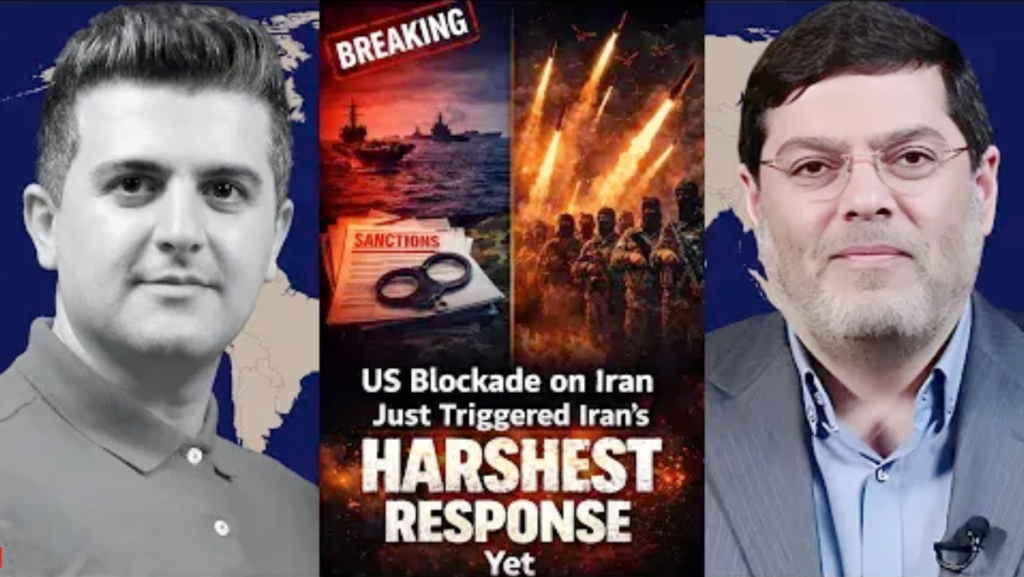 by Larry Johnson [4-14-2026] Larry C. Johnson(bio), Seyed Mohammad Marandi(bio), Nima Rostami Alkhorshid(bio).
Nima conducted an excellent interview of Professor Seyed Mohammad Marandi (University of Tehran), a prominent Iranian analyst and a personal friend of mine, who was part of the Iranian delegation in Islamabad. The good professor — in the video posted below — provided Nima with a sharp, critical assessment of the recent Iran-US negotiations. Here is my executive summary of what brother Marandi told Nima:
Marandi correctly portrayed the negotiations as a US concession forced by Iran’s battlefield successes during the recent conflict (including missile, drone, and defensive capabilities demonstrated over roughly 40 days of war against the “Trump-Netanyahu regimes”). He argued that Iran entered the talks from a position of strength—not weakness or desperation—and used “armed diplomacy” to document positions rather than out of trust in American promises.
He emphasized that Iran did not waiver from its key preconditions for the talks, which included:
- A comprehensive ceasefire (particularly involving Lebanon and Gaza).
- US fulfillment of prior commitments and respect for Iranian security/assets.
- No negotiations under pressure or sanctions.
Marandi repeatedly stressed that progress depends entirely on the US abiding by its obligations. Without concrete action, “there is no reason for us to continue negotiating.” He expressed no fear of returning to war, stating Iran is fully prepared for any scenario, including escalation, and has no illusions about the hostile nature of the Trump administration.
Marandi was blunt in describing the United States as the enemy of the Palestinian people, the region, and Iran itself, offering the following examples:
- Facilitating Israel’s slaughtering civilians in Gaza, Lebanon, and (via proxies) Iran.
- Being captive to the Zionist lobby, which prevents it from controlling Israel or delivering on ceasefires.
- Using talks hypocritically while maintaining aggression (e.g., sanctions, threats, and sudden moves like those attributed to JD Vance that abruptly ended sessions).
Marandi praised Pakistan (and Oman) as true friends of Iran with deep historic and people-to-people ties. He noted Pakistan’s behind-the-scenes support for the resistance and expressed appreciation for its hospitality during the talks. This contrasted sharply with his view of the US and its regional proxies.
He framed the broader context as part of the “axis of resistance” heroically defending Palestine. Iran’s steadfastness, despite decades of sanctions, wars, and terrorism, stems from its commitment to this cause—unlike other regional states aligned with Washington. He predicted long-term decline of US hegemony, accelerated by de-dollarization efforts (via BRICS, cooperation with Russia and China), and greater regional strength for the resistance.
The most surprising revelation from Professor Marandi was that Iran was prepared for a second day of negotiations but learned belatedly that the US decided, without informing the Iranian delegation, to end the talks and leave. Who does such a thing? It suggests to me that JD Vance was nothing more than an errand boy and that he was ordered by Susie Wiles to stop talking to Iran and leave, using so-called intransigence of Iran over the nuclear issue as an excuse.
Highly recommended that you also listen to the full video: