Scott Ritter: Brazil Elections Put the US ‘Donroe Doctrine’ in Check
 by Scott Ritter [11-20-2026] Scott Ritter(bio).
Lula’s fourth term sustains a major obstacle to US efforts to weaken BRICS cohesion and curb Chinese influence across Latin America, forcing the Trump administration to rely more on bilateral leverage than the regional realignment envisioned under the so-called Donroe Doctrine.
Luiz Inacio “Lula” da Silva won a historic fourth term as Brazil’s president in the Oct. 25 runoff election by a narrow margin (51.8% to challenger Flavio Bolsonaro’s 48.2%, or roughly 4.4 million votes). While Brazil remains deeply polarized, Lula’s victory extends his brand of left-of-center governance, which could strain US-Brazil relations given US President Donald Trump’s publicly stated affinity for the Bolsonaro family.
Lula, who just turned 81, overcame a first-round defeat — the first such comeback since Brazil’s return to democracy in the 1980s. While Flavio Bolsonaro (son of the imprisoned former president, Jair Bolsonaro) initially refused to concede and called for the result to be annulled, his party eventually recognized Lula’s victory. The result leaves a strong right-wing opposition and a likely conservative-leaning Congress, complicating Lula’s agenda on fiscal reform, security and the economy. While Lula has framed the electoral outcome as a defense of democracy against “negativity and lies,” successful governance will require compromise, something Brazil’s deep political divisions could make difficult.
The Donroe Doctrine Gets a Reality Check
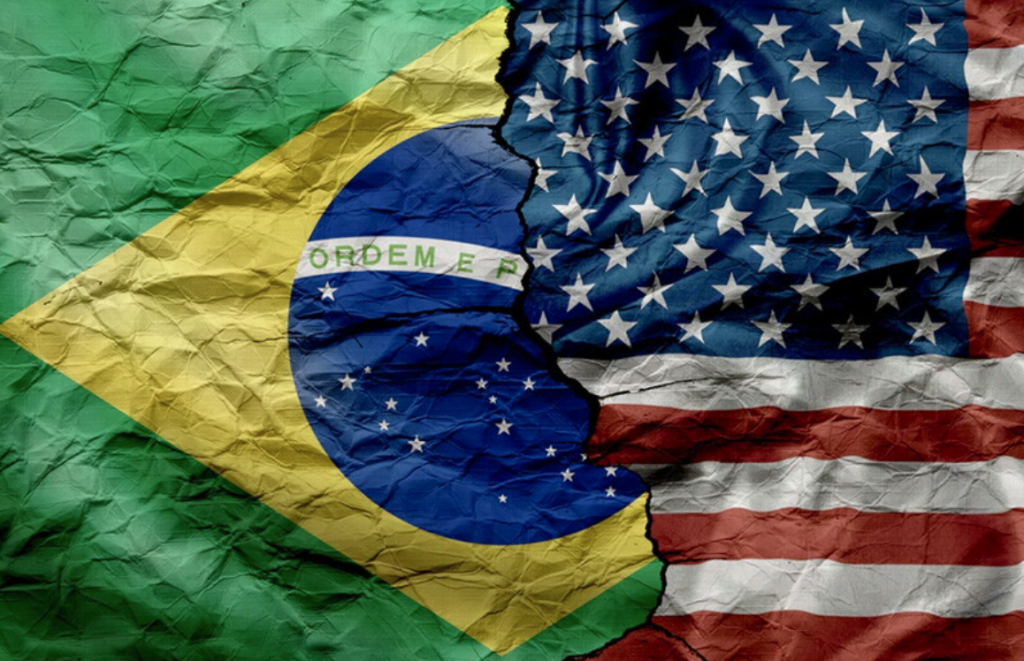
Lula’s victory sets the stage for a recalibration of Brazil-US relations. Trump’s push for aligned right-wing governments in Latin America under the so-called Donroe Doctrine has suffered a setback with Bolsonaro’s defeat. While Trump did not formally endorse Flavio, despite meeting him earlier and praising his first-round performance, his administration’s previous support for the Bolsonaro family has complicated relations with Lula.
The Donroe Doctrine is a contemporary label for the Trump administration’s effort to revive and update the Monroe Doctrine. It seeks to reinforce a US sphere of influence across the Americas, limit Chinese economic and strategic penetration, counter Brics multipolarism and favor governments aligned with Washington. This posturing is spelled out in the US National Security Strategy (NSS), which speaks expressly about the “Trump Corollary” to the Monroe Doctrine (colloquially referred to as the Donroe Doctrine), where the US will “deny non-Hemispheric competitors the ability to position forces or other threatening capabilities, or to own or control strategically vital assets, in our Hemisphere.” This provision specifically targets Chinese and Russian influence to weaken Brics cohesion and geographic reach. Under the “Enlist and Expand” approach promoted in the NSS, the US seeks to “reward and encourage the region’s governments, political parties and movements broadly aligned” with US principles and strategy. The administration’s available tools include tariffs, threats of secondary sanctions, political support for sympathetic governments and pressure on countries to reduce ties with China or abandon de-dollarization initiatives.
Brazil sits at the center of this contest. As Latin America’s largest economy and a founding Brics member, it is China’s largest trading partner in the region and a major destination for Chinese investment. According to the Brazil-China Business Council, bilateral trade in 2025 for goods only was $171 billion. China absorbs large volumes of Brazilian soybeans, iron ore and other commodities while investing heavily in energy, infrastructure and technology.
A Bolsonaro victory would have offered Trump a more politically sympathetic partner. Lula’s win instead leaves Brazil as a major independent actor that resists full alignment with US hemispheric goals, leverages the US-China rivalry for better terms and maintains close economic ties with Beijing. While the US retains tariff and diplomatic leverage, Brazil’s economic weight and diversified trade relationships limit how far the Trump administration can compel a shift, exposing the practical boundaries of the Donroe approach in South America’s largest market. For example, the US-Brazil trade in goods in 2025, at $94 billion, was just over half the rate of China-Brazil trade, according to the Office of the US Trade Representative.
While Trump has said he gets along with Lula, earlier US tariffs, imposed partly in response to the prosecution of Jair Bolsonaro, created friction that Lula was able to leverage domestically by emphasizing Brazilian sovereignty. Lula’s win complicates Trump’s ambitions to secure greater access to Brazilian rare earths and reduce Brazil’s economic dependence on China. But shared practical interests — trade, investment, minerals and regional stability — should allow a working relationship to continue, as both sides have incentives to de-escalate.
Further complicating relations is Flavio Bolsonaro’s departure from Brazil for the US shortly after the election, defying a Brazilian Supreme Court order to surrender his passport amid a money-laundering investigation, in which he denies wrongdoing. Bolsonaro traveled to the US, where the State Department agreed to grant visas to him and his family. Washington’s willingness to accommodate Bolsonaro could alienate Lula’s government and complicate cooperation. Nevertheless, the episode is unlikely to derail broader pragmatic engagement between Lula and Trump on economic and security issues.
Brics and China in the Spotlight
Lula’s reelection represents a significant setback for Trump administration efforts to contain Brics influence and limit China’s economic and strategic presence in Latin America. It preserves Brazil — the region’s largest economy and a founding Brics member — as an independent actor unwilling to align fully with Washington’s preferences.
The Trump administration has treated Brics as a challenge to US financial and geopolitical primacy and has threatened additional tariffs, including proposals ranging from 10% to 100%, against countries pursuing de-dollarization or “anti-American” policies associated with the group. Lula has long championed Brics as a platform for Global South multilateralism and institutional reform. His continued leadership sustains Brazilian support for the group’s expansion and agenda, including opposition to unilateral tariffs expressed at recent summits. This could make coordinated US pressure against the bloc more difficult. While Brics remains internally divided on core issues and has often avoided open confrontation with the US, Lula’s presence reduces the likelihood of Brazil moving toward Washington’s position within the group — something a Bolsonaro victory might have encouraged. Instead, Brazil is likely to continue prioritizing strategic autonomy and multipolar engagement.
The impact of Lula’s victory may be more pronounced when it comes to Trump administration efforts to limit Chinese influence. In addition to being China’s largest trading partner in Latin America, Brazil is a leading destination for Chinese investment. Chinese companies invested approximately $85.5 billion across 355 projects in Brazil between 2007 and 2025, with energy accounting for a substantial share. Lula has actively deepened these ties and framed them as consistent with his policy of strategic autonomy. China welcomed Lula’s reelection, signaling its readiness to expand the bilateral partnership.
Lula’s reelection offers reassurance to Beijing, which now avoids the uncertainty of dealing with a potentially less sympathetic Bolsonaro administration. It also represents a setback for Trump’s efforts to assert a US sphere of influence that counters China’s growing footprint — although notably, Trump has faced limits even with the politically aligned government of Javier Milei in Argentina. Milei threatened to cut ties with China on the campaign trail but quickly took a pragmatic turn on entering office. Nevertheless, Washington retains considerable economic and diplomatic influence. Cumulative direct US investment in Brazil stood at $90 billion in 2025, according to the US Bureau of Economic Analysis.
Lula is therefore likely to leverage US-China competition — particularly over rare earths and other critical minerals — to secure better terms from both powers.
Brazil’s commercial dependence on China (its exports to China are roughly three times those to the US) and domestic fiscal pressures limit how far Lula can distance himself from either power. Trump also retains significant leverage, including tariffs restrictions on investment and diplomatic pressure. Lula’s government will likely pursue a pragmatic diplomatic path, including engagement with China through multilateral forums such as the G20, while avoiding unnecessarily antagonizing Washington.
Ultimately, China’s entrenched economic presence in South America, Brazil’s preference for strategic autonomy and the limits of US political pressure in a region where trade and investment often outweigh ideological alignment will shape Lula’s approach. His victory does not eliminate Washington’s influence, but it underscores the difficulty of translating the Donroe Doctrine’s ambitions into a lasting regional realignment.