Trump’s Reality Check: The Ukraine conflict won’t be settled like a business deal
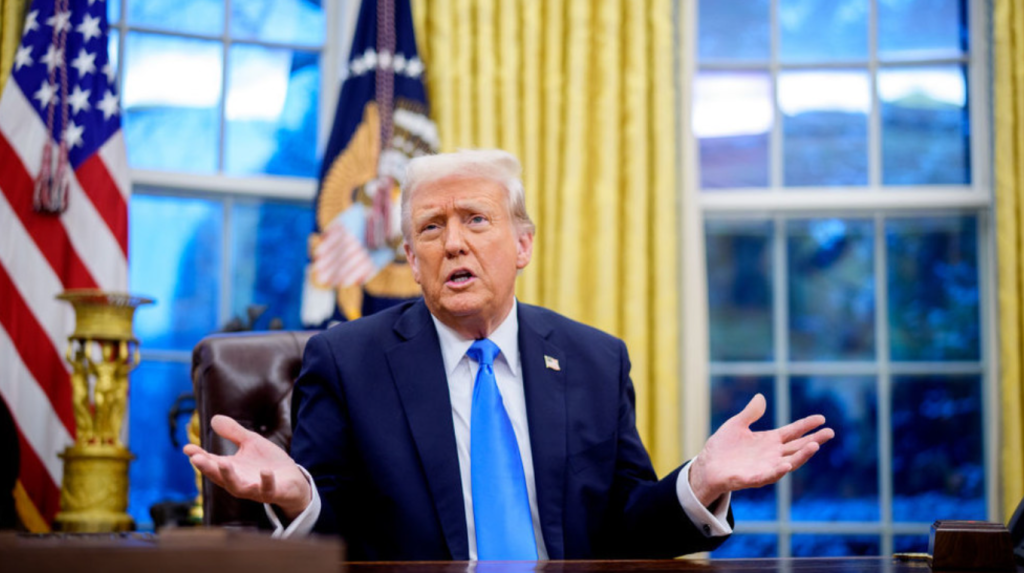
by Sergey Poletaev [2-17-2025 published].
(I've combined 5 articles in this post, since they all help understand what is at stake prior to the meeting in Riyadh on the 18th of the top diplomats from the US & Russia. I've also taken the liberty to highlight in bold key phrases & sentences. As the negotiations progress, we can come back to these articles to gauge how well they represented the key issues. — RAD)
Sergey Poletaev is an information analyst and publicist, co-founder and editor of the Vatfor project.
How will the situation develop if the US president’s efforts to end the war fail?
‘Deal’ – it’s the key word in Donald Trump’s vocabulary and he’s built his career on striking them, but as he embarks on his second presidential term, he is about to face a challenge that will put his famed negotiation skills to the test. The Ukraine conflict, unlike trade deals or business arrangements, is deeply entrenched in geopolitical, military, and ideological complexities.
While Trump may initially push for a swift resolution — perhaps attempting to broker a ceasefire similar to his approach in the Middle East — he will soon realize that Ukraine is a far bigger challenge. The contradictions surrounding the conflict are not just regional but global, and a quick fix is unlikely. If Trump’s efforts fail, how will the situation evolve?
US-Western Europe: Conflict or Quiet Sabotage?
Trump’s worldview is centered around the idea that the US is losing its global dominance. Since he cannot prevent this decline, his strategy appears to be one of disruption — seizing the initiative and reshaping alliances. He has long considered NATO an outdated burden, and his demand for members to increase defense spending to 5% of GDP is, for many European countries, entirely unrealistic. Currently, only four NATO members — Poland, the US, Greece, and the UK — spend more than 2% of their GDP on defense.
Should Trump manage to overcome internal opposition and reshape US foreign policy, NATO may become his next target. The transatlantic alliance underpins many global institutions, and dismantling NATO — or significantly weakening it — would be a logical step in dismantling globalization itself. Supporting opposition parties in Europe, particularly nationalist and right-wing movements that align with his worldview, is one way he could advance this agenda.
In response, Western European elites have two options: openly confront Trump, which could lead to a transatlantic crisis, or verbally agree to his demands while quietly sabotaging them. The latter scenario is more likely. While they may nod along with Trump’s calls for increased defense spending and a tougher stance on China, in practice, European governments are unlikely to follow through. Under Trump’s leadership, NATO could lose both its political influence and its aura of invincibility.
Trump’s Ukraine Plan: Reality Check Incoming
Trump’s team is eager to pressure Ukraine’s Vladimir Zelensky into accepting a ceasefire. However, his vision for peace is simplistic and detached from reality. The war in Ukraine is not just a local conflict — it is a battleground for larger global struggles.
The first step for Trump will be to push Zelensky toward a truce, though it remains unclear whether the Ukrainian leader would agree. More likely, Trump will pressure Kiev into lowering the military conscription age to ensure a continued supply of soldiers — just as was done last year in exchange for Western military aid.
Zelensky, however, has his own concerns. He is desperately seeking security guarantees from the West, particularly from Trump. Without such assurances, he knows that if a ceasefire is reached, he will be left alone to face Russia. So far, there is no indication that Trump is willing to provide these guarantees. If he distances the US from Ukraine, Zelensky will be in an extremely vulnerable position.
Ukraine: Western Europe’s Unwanted Burden
If Trump gives up on Ukraine, Western Europe may be forced to take responsibility for the war effort. However, the European Union lacks both the military stockpiles and the industrial capacity to sustain the Ukrainian Armed Forces. Financially, the EU could seize frozen Russian assets to fund Ukraine, but it is unclear how long that strategy could last.
Trump’s ideal scenario is simple: Western Europe buys weapons from the US and sends them to Ukraine. Whether this plan will work remains to be seen. The longer the conflict drags on, the more toxic the issue becomes within European politics, with public opposition growing. If Trump and EU bureaucrats clash, Ukraine may find itself abandoned.
Russia and the rest of Europe: No Grounds for Negotiation
Unlike with the US, Russia sees no potential for negotiation with the current Western European leadership. The EU has shown no willingness to engage in meaningful diplomacy, preferring to churn out endless sanctions. Moscow’s only real option is to build relationships with non-establishment political forces in Europe — leaders like Hungarian Prime Minister Viktor Orbán or Slovak Prime Minister Robert Fico, who prioritize national interests over Brussels’ agenda. If the EU continues its current trajectory, more such leaders will emerge.
Russia and the US: The Only Negotiation That Matters
The most important diplomatic developments will take place between Moscow and Washington. Trump’s immediate goal will be to resolve the Ukraine conflict quickly, casting himself as the president who ended an unwinnable war. He can still blame Biden for the US failure in Ukraine, but the longer the conflict continues, the more responsibility he will bear.
For Russia, the time for serious negotiations has not yet arrived. Putin’s primary goal is a decisive military victory that dismantles Ukraine’s ability to resist. With Ukraine preparing for a last-ditch spring-summer offensive, the fighting will continue for at least a few more months. During that time, the war will become Trump’s problem, not Biden’s.
At that point, Washington will face a crucial decision: escalate further, potentially triggering a direct confrontation with Russia, or accept defeat. Trump, who is more focused on a potential conflict with China, seems unwilling to risk war with Moscow.
If this writer were preparing for negotiations with Trump, the message would be clear:
“Donald, your hand is weak. Ukraine will lose, and you know it. In six months, the failure will be on your shoulders, and you’ll have to decide whether to start a nuclear war — something you don’t want. You should cut your losses while you still can. No, we won’t trade Ukraine for China or anything else. We’re prepared to wait until you have nothing left to bargain with.”
Ukraine, NATO, and the Bigger Picture
The only real path to peace in Ukraine is its capitulation and the dismantling of anti-Russian nationalism. This requires a decisive military defeat, something the Russian army has been working toward for three years. If Ukraine’s military collapses, a coup in Kiev could become a real possibility.
Meanwhile, the NATO alliance faces a reckoning. Eastern European nations have long assumed that even informal NATO ties guarantee absolute protection from Russia. Ukraine’s fate will shatter this illusion. A Ukrainian defeat would mark the end of NATO expansion and shake Western influence in the region. Potential NATO candidates will see Ukraine as a cautionary tale.
Looking Ahead
If Trump’s efforts to resolve the Ukraine conflict fail, he will have three options: escalate, withdraw, or shift the burden to Europe. None of these choices will resolve the underlying issues, but they will shape the future of NATO, the EU, and the broader international order. Meanwhile, Russia will remain patient, waiting for the moment when the West is forced to acknowledge the new geopolitical reality.
As for what happens next — whether the conflict expands, shifts to new regions like the Baltics, or fades into a prolonged stalemate — only time will tell. One thing is certain: Trump’s path to a ‘deal’ on Ukraine will be far more complicated than he initially thought.
Related
Fyodor Lukyanov: Vance only said what Americans really think [2-15-2025]
Enslaved: Here’s how the US made Western Europe its puppet [2-14-2025]
Trump wants a deal with Russia – but can he deliver? [2-13-2025]
Russian FM outlines key goal for talks with US
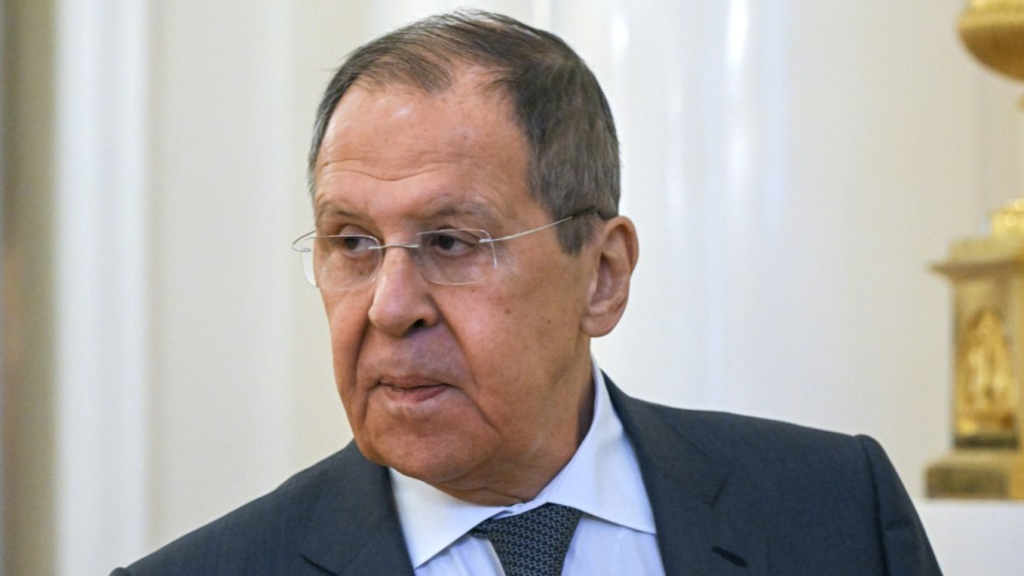
Russian Foreign Minister Sergey Lavrov attends a meeting with Serbian Foreign Minister Marko Djuric in Moscow, Russia. © Sputnik / Sergey Guneev
by RT [2-17-2025 published].
Moscow wants to hear what Washington has to say on settling the Ukraine crisis, Sergey Lavrov has said.
A Russian team will hold talks with the US in Saudi Arabia primarily in order to find out what is being proposed by the administration of US President Donald Trump to settle the Ukraine conflict, Foreign Minister Sergey Lavrov has confirmed.
On Monday, Kremlin spokesman Dmitry Peskov announced that Lavrov and Yury Ushakov, President Vladimir Putin’s top foreign policy aide, will head to Riyadh to meet with Trump officials to prepare the ground for an upcoming meeting of the two leaders. According to Peskov, the talks will also be devoted to the restoration of bilateral relations.
The development came after Putin and Trump held a 90-minute phone call last week which revolved around settling the Ukraine conflict.
Asked about his expectations for the talks, Lavrov said that “when we go to negotiations on the proposal of our partners, first of all, we always want to hear them out.” He also noted that Trump and Putin agreed to leave behind “an absolutely abnormal period” in relations between the countries, which have barely communicated over the past three years.
“The presidents agreed that it is necessary to resume dialogue on all issues that can be resolved one way or another with the participation of Russia and the US… Therefore, we will listen to our American counterparts and, of course, we will be ready to respond. Then we will report to our leaders who will take decisions on future steps,” the minister said.
Trump has vowed to swiftly end the Ukraine conflict, with his team reportedly planning to reach a ceasefire by late April. Following his talks with Putin, the US president suggested that he did not think it was “practical” for Ukraine to join NATO, adding that Kiev has very little chance of regaining the territory it has lost to Russia over the past decade.
Moscow has stressed that it seeks a permanent solution to the conflict rather than a temporary ceasefire. It has insisted that Ukraine must commit to neutrality, denazification, and demilitarization, as well as to recognize the territorial reality on the ground.
Related
Lavrov traveling to Saudi Arabia to prepare Trump-Putin meeting – Kremlin [2-17-2025]
Putin aide clarifies Moscow’s approach to US talks

FILE PHOTO: Alsafat Square in Riyadh, Saudi Arabia. © xavierarnau
by RT [2-17-2025 published].
Kiev and the EU will be excluded from the initial negotiations with Washington, Yury Ushakov has said.
High-level Russian and US delegations will hold talks in Riyadh without the participation of third countries, President Vladimir Putin’s top foreign policy aide Yury Ushakov has said. Earlier on Monday, Ukraine’s Vladimir Zelensky stated that Kiev would treat any negotiations without its involvement as “null and void.”
According to Ushakov, the discussions in Saudi Arabia on Tuesday aim to lay the groundwork for ending the conflict in Ukraine.
“The talks in Riyadh will be bilateral – between Russia and the United States,” Ushakov confirmed.
The Russian delegation will include Foreign Minister Sergey Lavrov and himself, stated Ushakov. Kirill Dmitriev, chief executive of the sovereign wealth fund (RDIF), may also join, he added. Created in 2011, the fund aims to attract direct investments and venture capital into Russia.
The American side will be represented by US Secretary of State Marco Rubio, Trump’s national security adviser Mike Waltz, and Steve Witkoff, special envoy for the Middle East.
EU diplomats will not be present at the meeting. Kellogg recently argued that involving multiple parties in the negotiations could hinder its progress.
Kiev will not recognize any agreements that may be reached between Russia and the US during talks in Saudi Arabia, Zelensky told journalists on Monday. The Ukrainian government will only acknowledge negotiations that involve its representatives, he said.
The talks in Riyadh follow a phone call between US President Donald Trump and his Russian counterpart Vladimir Putin, during which the two leaders agreed to initiate negotiations to end the nearly three-year conflict.
Riyadh has previously facilitated prisoner exchanges between Russia and Ukraine and maintains diplomatic relations with both nations. Kremlin spokesperson Dmitry Peskov explained that the location was selected because it suited both countries.
The RDIF has been actively involved in initiatives within the BRICS group of emerging economies, which includes Russia, China, India and Brazil, among others. Saudi Arabia was invited to join the bloc in 2023, and has engaged in discussions regarding potential membership. However, it has yet to make a final decision.
Related
Upcoming US-Russia talks in Saudi Arabia: What we know so far [2-17-2025]
Macron pleads with Saudi prince over Ukraine talks [2-17-2025]
UK and EU ‘incapable of negotiation’ – Moscow

Permanent Representative of Russia to the UN, Vassily Nebenzia. © Brian Smith / RIA Novosti
by RT [2-17-2025 published].
Both are obsessed with seeing Russia lose on the battlefield, and cannot take part in peace talks, Vassily Nebenzia has said.
The UK and EU cannot be part of the Ukraine peace talks, as they are incapable of negotiating, Moscow’s ambassador to the UN, Vassily Nebenzia has said.
The diplomat made the comments as Russian Foreign Minister Sergey Lavrov and Yury Ushakov, President Vladimir Putin’s top foreign policy aide, arrived in Saudi Arabia on Monday for bilateral talks with top US diplomats, discussions to which the EU and Ukraine are not invited.
“The Minsk guarantors, and in general EU states and the UK are incapable of negotiation and cannot be a party to any future agreements on regulating the Ukrainian crisis,” Nebenzia told the UN Security Council on Monday.
Both are blinded by “a manic desire to defeat Russia on the battlefield at the hands of the surviving Ukrainians,” the diplomat said. Neither EU countries nor the UK are suitable to serve “as either guarantors or middlemen” to a potential ceasefire between Russia and Ukraine, he added.
US President Donald Trump’s special envoy for ending the hostilities, Keith Kellogg, has also noted that European states have no place in upcoming peace talks. France and Germany served as the Western guarantors of the failed Minsk accord, a deal supposedly aimed at stopping hostilities between Ukraine and the Donetsk and Lugansk People’s Republics.
Former German Chancellor Angela Merkel has since admitted the ceasefire was intended to buy time for Kiev to build up strength.
While previously both the US and its allies in Europe have shown a united front in backing Ukraine in its conflict with Russia since its escalation in 2022, Washington has touted a pivot under Trump. The new US president has promised to bring a swift end to the hostilities, while simultaneously signaling that Europe should begin to shoulder more of the cost of its own security, as well as Ukraine’s.
The Russian diplomatic delegation in Riyadh is expected to prepare the ground for an upcoming meeting between Trump and Putin, following tomorrow’s initial bilateral involving senior diplomats form both sides.
Moscow is coming to the negotiations primarily to “hear out” Washington regarding the Ukraine conflict, as well as to restore communication after “an absolutely abnormal period” in Russia-US relations, Foreign Minister Sergey Lavrov has said.
The top diplomat has previously stressed that Moscow will reject any attempt to temporarily freeze the Ukraine conflict, as Kiev’s Western backers would use such a measure to rearm Kiev. Any solution to the hostilities would need to have an ironclad legal basis and address the root causes of the conflict, Lavrov has said.
Related
Macron’s Ukraine summit a gathering of ‘warmongers’ – EU state’s FM [2-17-2025]
UK ready to send troops to Ukraine – Starmer [2-16-2025] Definitely unacceptable to Russia.
Upcoming US-Russia talks in Saudi Arabia: What we know so far

by RT [2-17-2025 published].
Top officials from both countries are to discuss ways to end the Ukraine conflict in Riyadh.
High-level Russian and US delegations will hold talks in Saudi Arabia to restore diplomatic relations and pave the way for a settlement of the Ukraine conflict.
The negotiations, scheduled to begin on Tuesday in the Saudi capital of Riyadh, were proposed during last week’s 90-minute phone call between Russian President Vladimir Putin and US President Donald Trump.
Here is what we know about the upcoming talks:
Top negotiators in play
Both Russia and the US have sent their top diplomats and officials to Saudi Arabia. The Russian delegation is led by Foreign Minister Sergey Lavrov and Yury Ushakov, Putin’s top foreign policy aide.
The American side is represented by US Secretary of State Marco Rubio, Trump’s national security adviser Mike Waltz, and Steve Witkoff, Special Envoy for the Middle East. Neither Ukrainian or EU diplomats will be present at the meeting.
Several Western media outlets have expressed surprise at the absence from the US delegation of Keith Kellogg, Trump’s special envoy for Ukraine and Russia.
Russia’s goals
Russia is coming to the talks primarily to “hear out” the US on the Ukraine conflict and resume bilateral dialogue, which has been largely on ice for the past three years, according to Lavrov.
Kremlin spokesman Dmitry Peskov said the meeting would be devoted to “restoring the entire complex of Russian-American relations” as well as “preparing for possible negotiations on the Ukrainian settlement” and laying the groundwork for a Trump-Putin summit.
Moscow maintains that it is not seeking a temporary ceasefire, but a permanent and comprehensive settlement of the Ukraine conflict which would address the root causes of the crisis, which first erupted with a Western-backed coup in the country in 2014.
Russian officials have insisted that as part of any settlement, Ukraine must agree to neutrality, demilitarization, denazification, and recognition of the territorial reality on the ground.
Lavrov has also ruled out the idea that Russia could agree to any territorial concessions to Ukraine.
US stance
US Secretary of State Marco Rubio, who spoke to Lavrov by phone on Saturday and has already arrived in Saudi Arabia, said the meeting was aimed at restoring communication with Russia.
He also would not say what particular topics related to the Ukraine conflict the sides would discuss, or whether the US would consider lifting sanctions on Russia. He stressed that the Trump-Putin call alone cannot “solve a war as complex as this one,” and that further talks are required.
Following the call with Putin, Trump suggested that he did not think it is “practical” for Ukraine to join NATO, adding that Kiev has very little chance of regaining the territory it has lost to Russia over the past decade.
He also hinted that Ukraine’s Vladimir Zelensky – whose presidential term ended last spring and who Russia considers “illegitimate” – would have to organize elections.
Ukraine and EU sidelined
Ukraine’s Vladimir Zelensky has confirmed that he has not been invited to the talks in Riyadh, stressing that Kiev will treat any talks “about Ukraine without Ukraine” as “null and void.” Just like Russian and US officials, the Ukrainian leader is also poised to visit Saudi Arabia, but his visit is not officially directly linked to the upcoming meeting.
The US has also signaled that EU powers won’t have a seat at the table during Tuesday’s talks, raising fears that the bloc’s stance on the Ukraine crisis will be ignored.
Nevertheless, Kellogg sought to reassure EU leaders by declaring that this did not mean that “their interests are not considered, used or developed”. The envoy also insisted that the US does not exclude Ukraine from the dialogue.
Against this backdrop, French President Emmanuel Macron convened an emergency summit of leaders in Paris on Monday which will center on Ukraine and “the challenges of security in Europe.”
According to the Washington Post, the meeting is expected to be attended by the leaders of Germany, Britain, Italy, Poland, Spain, the Netherlands and Denmark, senior EU officials and NATO chief Mark Rutte. The summit will reportedly include consultations on continued aid and security guarantees to Kiev, with UK Prime Minister Keir Starmer already signaling that his country is ready to send troops to Ukraine “if necessary”.
Related
Trump says Russia isn’t a threat to NATO [2-17-2025]
Russian FM outlines key goal for talks with US [2-17-2025]
Zelensky ‘refuses to recognize’ Russia-US talks [2-17-2025] He has already been sidelined, since he isn't interested in peace.
Macron pleads with Saudi prince over Ukraine talks [2-17-2025]