No Iran-US deal in Islamabad Negotiations due to US extortion
 by Tehran Times [4-12-2026].
(RAD: Since the US has NOT achieved any of its original objectives on the battlfield,, it tried to achieve them during negotiations in Pakistan. That also failed. The US & much of the legacy media is trying to spin the failed negotiations to the advantage of the US in ways that are deceptive & dishonest. Therefore, it is important to understand Iran's side directly from Iran. Furthermore, the US side isn't acknowledging the civilian casualties & destructive war crimes. — RAD)
Holding the upper hand on the battlefield, Iran sees no reason to yield to Washington’s excessive demands.
TEHRAN- US President Donald Trump has once again intensified threats against Iran following negotiations between Tehran and Washington in the Pakistani capital Islamabad, where high-level talks ended on Sunday without a deal.
The negotiations, mediated by Pakistan, brought together senior Iranian and American officials in the wake of a fragile two-week ceasefire following a 40-day US–Israeli war against Iran that began on February 28. The talks began on Saturday and continued into early Sunday but ended in deadlock, with both sides blaming each other for the failure.
High-level talks
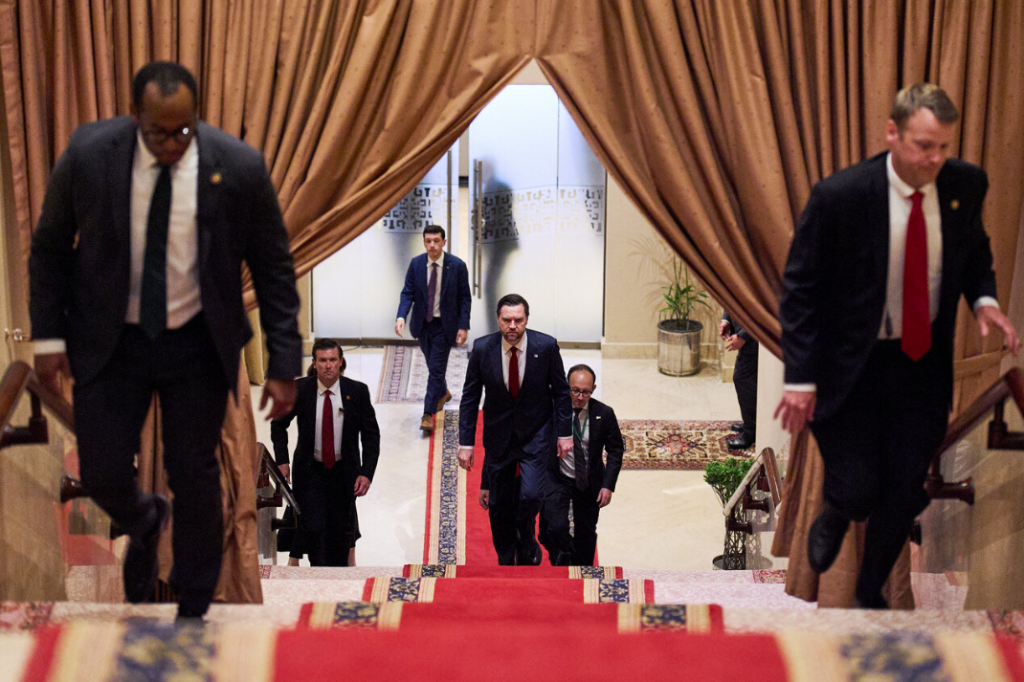
Vice President J.D. Vance led a delegation, joined by US special envoy Steve Witkoff and President Donald Trump’s son-in-law Jared Kushner. The Iranian delegation was headed by Parliament Speaker Mohammad Baqer Qalibaf and included Foreign Minister Abbas Araghchi and other senior officials. Despite the seniority of both teams, no breakthrough was achieved.
Iran’s nuclear program
At the core of the disagreement remained Iran’s nuclear program. Vance demanded an “affirmative commitment” that Iran would not pursue nuclear weapons among other excuses.
Iran has repeatedly stressed that its nuclear program is entirely peaceful and compliant with international law. Tehran has also reiterated that it has no intention of developing nuclear weapons, a position also supported by international intelligence assessments which have found no evidence of a weapons program. Iranian officials maintain that uranium enrichment on the country’s soil is a sovereign right and cannot be subject to external imposition.
A wall of mistrust
Iran’s parliament speaker, the head of the Iranian team, said although Iran offered “constructive initiatives”, the US was “unable to gain the trust of the Iranian delegation in this round of negotiations”. He said it was now up to Washington “to decide whether it can gain our trust or not”.
Qalibaf said Iran has no trust in the opposite side due to the experience of the two US-Israeli-imposed wars; the ones they launched on February 28 and in June last year.
Foreign Ministry spokesman Esmaeil Baqaei noted that while limited convergence was achieved on secondary issues, major differences remained on two to three core matters. Iranian media also reported that excessive US demands were the main obstacle to any agreement.
US-Israel warmongering
The diplomatic breakdown followed the 40-day war that began with coordinated US–Israeli strikes on Iran, including the assassination of Iran’s Leader Ayatollah Seyyed Ali Khamenei and several senior military officials in Tehran on February 28.
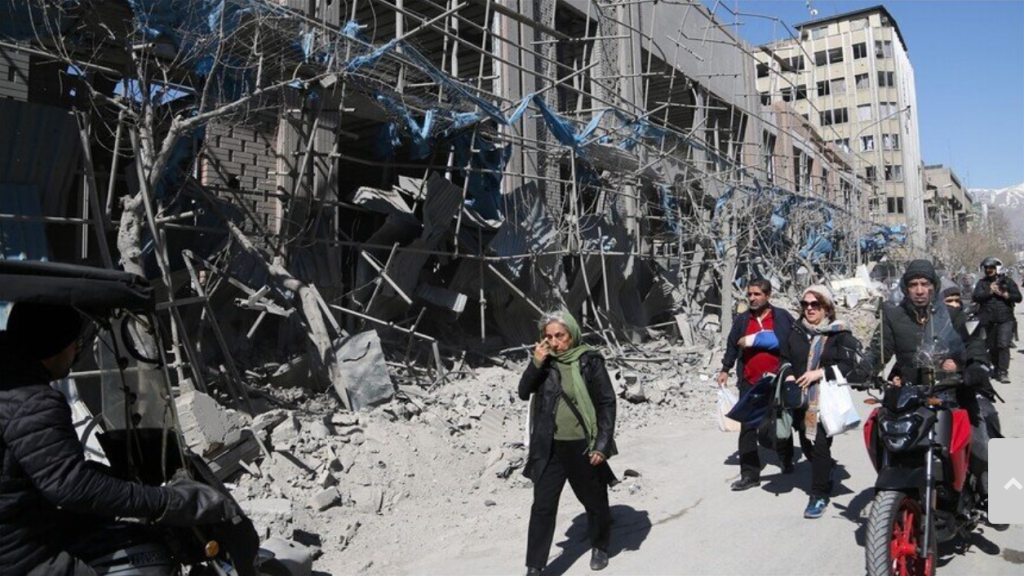
Throughout the war, Iranian territory came under extensive attack targeting energy infrastructure, hospitals, schools, and residential areas, resulting in heavy casualties and widespread destruction.
Iranian deterrence
Despite the scale of the military campaign, Iran’s defense structure was not broken. Instead, Iranian forces mounted a forceful response, striking US bases across the Persian Gulf region and Israeli targets in cities such as Haifa and Tel Aviv. These retaliatory strikes underscored Iran’s continued operational reach and deterrence capability.
A key strategic development was Iran’s effective control over the Strait of Hormuz, where it restricted the movement of vessels linked to the US, Israel, and their partners. The move triggered global energy concerns and highlighted Iran’s leverage over one of the world’s most critical maritime chokepoints.
Strategic miscalculation
The outcome of the 40-day conflict is increasingly viewed as a major strategic miscalculation by Washington and Tel Aviv. Despite declared objectives of dismantling Iran’s military capabilities and forcing unconditional surrender, those goals were not achieved. Iran maintained its defensive structure, sustained retaliatory capacity, and preserved strategic deterrence throughout the war.
Diplomatic breakdown
The failure on the battlefield was mirrored in Islamabad. US maximalist demands clashed with Iran’s insistence on sovereign rights and mutual respect. Even Pakistan’s mediation could not bridge the gap, and both sides left the talks without progress while exchanging blame.
Return to pressure
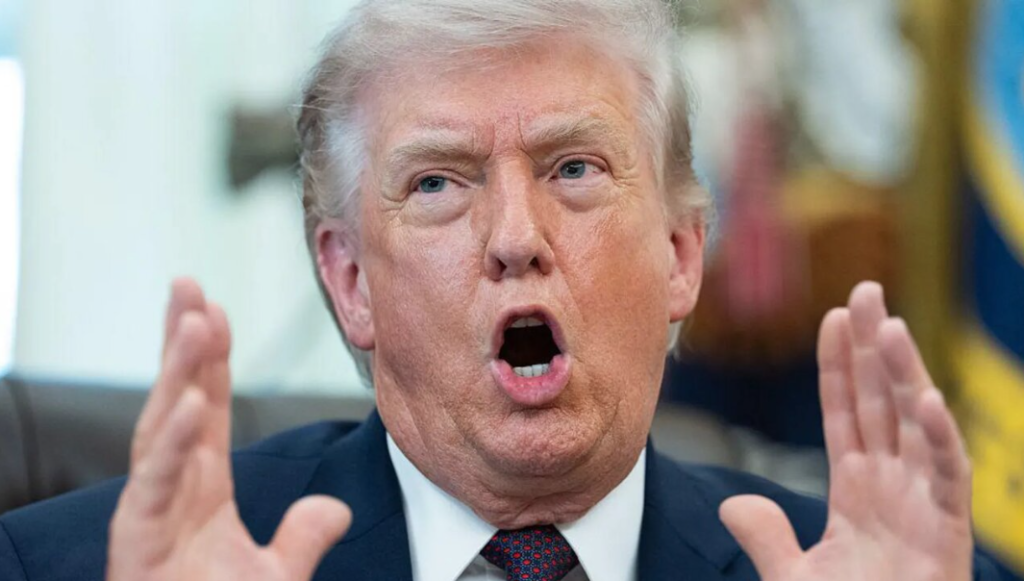
Following the collapse of negotiations, Trump sharply escalated his rhetoric once again, warning of new measures against Iran and signaling a potential maritime escalation in the Strait of Hormuz.
In a series of posts on Truth Social, Trump claimed that the United States Navy would begin intercepting vessels in and around the strategic waterway, including ships he described as being linked to Iran or “paying a toll” to Tehran. He said the US would move to “block any and all ships trying to enter or leave the Strait of Hormuz,” and added that American forces would act to neutralize maritime threats, including the removal of mines allegedly laid in the area.
He further warned that any Iranian action against US forces or commercial shipping would be met with overwhelming force, stating that those who target “peaceful vessels will be blown to hell.” Trump also declared that Washington remained “locked and loaded,” suggesting that the United States was prepared for further military escalation “at the appropriate moment.”
At the same time, he framed the proposed measures as part of an effort to prevent what he described as Iranian “extortion” through control of the strategic waterway, insisting that Iran “will not be allowed to profit” from the situation and reiterating claims that Tehran’s actions were tied to broader nuclear ambitions.
In effect, the rhetoric combined threats of direct military engagement with an attempt to internationalize enforcement of a potential blockade, signaling a continuation of coercive pressure despite the failure of both military and diplomatic tracks to produce the stated objectives.
Iran has said that all vessels not affiliated with the United States, Israel, and countries involved in the recent aggression against Iran may pass through the Strait of Hormuz, subject to coordination with Iranian authorities.
It appears that Washington is now attempting to internationalize the consequences of its failed strategy by drawing other countries into maritime enforcement and pressure measures, in an effort to share the costs of a confrontation that has already exposed the limits of US military and diplomatic leverage.
Lascaris: Trump’s Iran policy trapped by delusions and unilateralism
by Tehran Times [4-12-2026].
TEHRAN- Political analyst Dimitri Lascaris says the Trump administration’s approach to Iran is fundamentally flawed – undermined by ideological delusions such as an obsession with maximalist pressure and a disregard for diplomatic norms.
According to Lascaris, as long as Washington refuses to accept the limits of coercive diplomacy and ignores geopolitical realities – including Iran’s strategic autonomy and regional influence – meaningful negotiations will remain impossible. He argues that the White House’s behaviour reflects broader critiques of Trump’s foreign policy as erratic and out of touch with international consensus.
Lascaris also points to recent comments by Vice President JD Vance, who claimed that Iran rejected the Trump administration’s proposal as the “best and final” deal. That claim, Lascaris says, highlights the growing tension between US assertiveness and Iranian scepticism. The resulting impasse is rooted in mutual distrust, unilateralism, and a complete absence of genuine negotiation.
“Real engagement demands flexibility, transparency, and respect for international norms – elements that are entirely absent in Trump’s hardline stance,” Lascaris said. Until those elements are restored, he concludes, meaningful diplomacy with Iran is unlikely to move forward.
Negotiations between Iran and the United States in Islamabad, Pakistan, concluded without an agreement this Sunday morning. Iran attributed this outcome to the excessive demands made by the American side.
Iran medical body identifies over 3,750 victims of US–Israeli aggression
by Tehran Times [4-12-2026].
TEHRAN – Iran’s Forensic Medicine Organization has identified 3,753 people killed in the joint US-Israeli war, the head of the body announced, amid efforts to assess the human toll of the aggression launched on February 28.
Abbas Masjedi said the victims were identified using “scientific and specialized methods.” Of the total number, 2,875 were men and 496 were women. He added that foreign nationals were also among the dead, including citizens of Afghanistan, Syria, Turkey, Pakistan, China, Iraq, and Lebanon.
The announcement comes as Iranian authorities release further details about the scale of civilian casualties resulting from the unprovoked American-Israeli military campaign.
Majid Miadfar, head of Iran’s Emergency Organization, also said the death toll includes 260 women and 221 individuals under the age of 18. Among them were 18 children under the age of five.
Miadfar described the death of 168 people, most of them schoolgirls, from Shajareh Tayyebeh Elementary School in the southern city of Minab as one of the most harrowing chapters of the war. A US missile hit the school in the first day of the aggression on February 28.
Miadfar also detailed extensive damage to Iran’s healthcare infrastructure. A total of 400 medical facilities, 57 emergency bases, and 47 ambulances have been struck and damaged during the US–Israeli attacks. Two air ambulances and one sea ambulance also suffered significant damage.
Among health workers, 26 have been martyred and 118 injured. Of those wounded, 78 were on duty treating injured civilians at the time of the strikes.
The United States and Israel began their military campaign despite indirect negotiations between Tehran and Washington over Iran’s nuclear program. The aggression has included a wave of strikes targeting both military sites and civilian infrastructure across the country, resulting in heavy casualties and widespread destruction.
In response, Iran’s Armed Forces have carried out multiple waves of retaliatory missile and drone operations targeting US positions in the Persian Gulf region and Israeli sites in the in cities such as Haifa and Tel Aviv, vowing that acts of aggression against the Iranian nation will not go unanswered. Iran and the US agreed to a two-week ceasefire last week.