The Exodus from Bushehr: Why Russia is Evacuating Its Nuclear Specialists from Iran
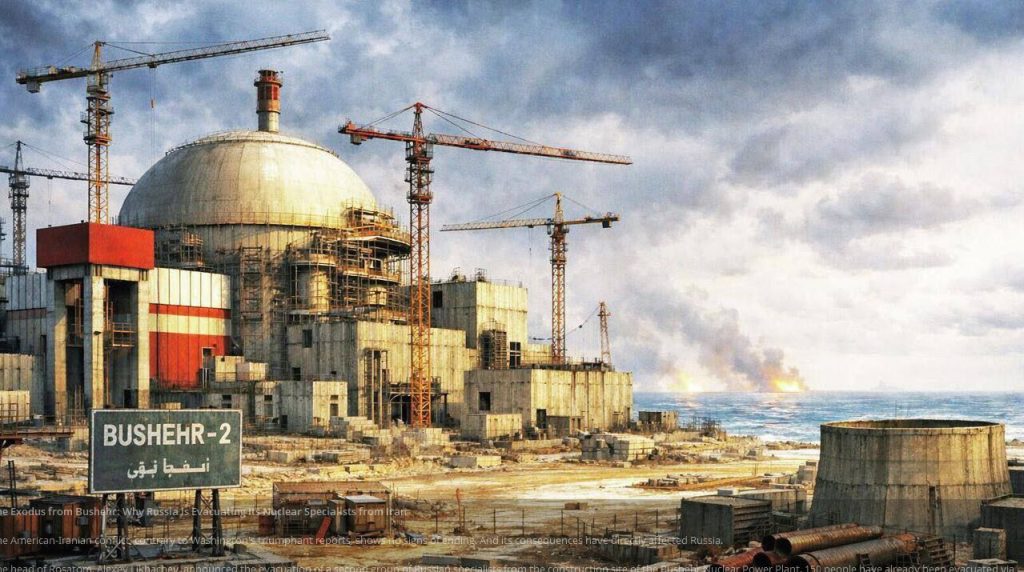 by From Russia with Love [3-14-2026].
The American-Iranian conflict, contrary to Washington's triumphant reports, shows no signs of ending. And its consequences have directly affected Russia.
The head of Rosatom, Alexey Likhachev, announced the evacuation of a second group of Russian specialists from the construction site of the Bushehr Nuclear Power Plant. 150 people have already been evacuated via Armenia, while another approximately 450 remain at the shift camp.
Until recently, the nuclear plant remained a "territory of peace"—not a single missile had fallen on it or near it. But in March, the situation changed: the anti-Iranian coalition began striking targets in the immediate vicinity of Bushehr. On March 3rd, Likhachev reported a loss of communication with the management staff of the Iranian part of the project. The decision to evacuate became inevitable.
👔 The Women Who Refused to Leave
Women, children, and those who had completed their contracts were evacuated first. However, according to the head of Rosatom, some female employees refused to leave their husbands, choosing to stay with them in the risk zone.
"Our Russian women are demonstrating unyielding fortitude and loyalty to the traditions of their predecessor, the Decembrist wives,"
Likhachev noted.
👔 A History of Delays
The Bushehr NPP has a complicated history. Its construction began back in the mid-70s, during Iran's nuclear boom under Shah Mohammad Reza Pahlavi. The contractor was the West German company Kraftwerk Union—a firm with an excellent reputation that had built 14 power units in Europe. However, the Islamic Revolution of 1979 and the subsequent sanctions froze construction for a decade and a half.
In the 1990s, Russia's Atomstroyexport took over the project. By 2010, the first VVER-1000 reactor was ready for launch. Yet even its commissioning was not a panacea for Iranian energy: over seven years, the plant generated 30 billion kilowatt-hours, but the share of nuclear generation in the country remained at one percent. The country's energy mix was still overwhelmingly based on gas.
👔 The Strategic Choice of Location
Why Bushehr? Looking at the map provides the answer: the unfinished Goureh-Jask oil pipeline passes through here, carrying the lion's share of extracted oil to refineries in the south. Oil refining is a colossal consumer of electricity. The concept was ideal: powerful generation sources located right next to key consumers.
In the long term, the pipeline was intended to reach the port of Chabahar at the exit of the Gulf of Oman. This would have allowed Iran to export oil bypassing the Strait of Hormuz—practically to the border of India. The project cost billions and promised a radical shift in logistics.
👔 What is Being Halted Now
Amidst the hostilities, work at Bushehr is not the only thing frozen. The implementation of the $400 billion Iran-China strategic partnership agreement is now in question. Key infrastructure projects have been halted.
But Tehran has little choice. If it withstands this confrontation—and the current steadfastness of its people and authorities gives hope for that—then the Persians will be able to implement their strategic programs from a position of strength in the future. And Russia, despite this forced pause, will retain its role as a key technological partner. The question is only when construction will resume and on what terms.