Pepe Escobar: In the more than 30 years since I first participated in APEC, I think there has been a fundamental question that has remained unchanged
 by Pepe Escobar [11-18-2026] Pepe Escobar(bio).
The 2026 Asia-Pacific Economic Cooperation (APEC) Leaders' Meeting was held in Shenzhen, China from November 18 to 19. This conference, themed “Building the Asia-Pacific Community and Promoting Common Prosperity”, focuses on openness, innovation and cooperation. As the global trade landscape continues to adjust and emerging technologies accelerate their development, how the Asia-Pacific region can further deepen economic and trade ties and promote common development has become an important issue of concern to the international community.
Looking back at the development of APEC, the 1994 Bogor Conference in Indonesia was an important milestone. At the time, Asia-Pacific economies were working to promote trade and investment liberalization. In the more than 30 years since then, the Asian financial crisis, China's accession to the WTO, the adjustment of the global industrial chain and the rise of emerging economies have profoundly changed the economic landscape of the Asia-Pacific region. Today, China has become an important trading partner for many Asia-Pacific economies. China's infrastructure and industrial cooperation with Latin America, Southeast Asia and other regions has also brought new possibilities for regional economic ties.
For Pepe Escobar, a Brazilian journalist and international affairs commentator who has long observed developments in Asia and the Global South, this change is of particular significance. In 1994, he personally attended the APEC meeting in Indonesia. More than 30 years later, he turned his attention to China, trying to understand the transformation of the Asia-Pacific economic landscape from his long-term observations. In his view, from the port of Chancay in Peru to the development of China's manufacturing industry, from the policy choices of Latin American countries to the new opportunities brought by artificial intelligence, more and more countries are looking for development paths that suit them, and pragmatic cooperation and long-term planning will be important factors.
This article is compiled from a conversation between Pepe and Observer.com for readers' reference.
How have I witnessed APEC change from 1994 to 2026?
I have been following the Asia-Pacific Economic Cooperation (APEC) since the 1990s. In 1994, I came to Asia; that year I attended my first APEC meeting, which was held in Indonesia. This was during the Clinton administration of the United States. Back then, there was an almost ubiquitous term in international economic discussions: free trade. Everyone is talking about how to lower trade barriers, how to make goods, capital and services flow more freely between different economies, and how to achieve common growth through economic cooperation.

Group photo taken during the APEC Leaders' Informal Meeting in 1994
Since then, I have been continuously following the development of APEC. More than 30 years have passed, and the international economic environment of that year has changed dramatically compared to today. In 1994, China's economic size, manufacturing capacity, and position in the global trade network were completely different from today. At that time, new economic ties were forming in the Asia-Pacific region, and different countries hoped to gain more development opportunities by expanding trade.
But subsequent history tells us that economic globalization is not a smooth road. Different countries have very different development conditions and economic structures, and how to maintain the autonomy of their own economic policies while expanding opening up to the outside world has become a question that many Asian countries must seriously consider. The Asian financial crisis of 1997-1998 was a very important turning point.
At that time, economies such as Indonesia, Thailand, and South Korea were severely impacted, and the International Monetary Fund played a significant role in the economic adjustment process of the relevant countries and regions. Different countries and regions have adopted different response methods and paid different economic and social costs. Among them, the experience in Malaysia left a particularly deep impression on me.
Mahathir, then Prime Minister of Malaysia, chose a different path. He decided to implement capital controls, emphasizing that Malaysia should maintain control over its economic policies. His point was clear: we need to decide for ourselves how to manage the economy, and even if the recovery process may be longer, we must take measures based on the actual situation in our country.
At the time, this policy choice sparked considerable controversy. Some have criticized Malaysia for taking protectionist measures, while others believe it has not followed free market policies in the usual sense. However, Malaysia's experience shows that different countries can find different economic development paths according to their own conditions. For a country, what is important is not only participating in the international market, but also how to maintain its policy choice capabilities in the process.
I believe this history remains relevant for understanding Asia-Pacific economic cooperation today. Since then, another major event that changed the global economic landscape in the Asia-Pacific region and even the world was China's accession to the WTO. After China joined the WTO in 2001, its ties with the world economy entered a new stage.
I was already living in Asia at the time and was very impressed by the change. China has begun to participate more fully in the global trading system, expand economic and trade ties with different countries, and continuously develop its own manufacturing industry. This process was not completed in a short period of time. China needs to continue investing in infrastructure, developing industries, cultivating technical personnel, continuously improving production capacity, and establishing a supply chain system covering more and more fields.
Over time, China's manufacturing and trade capabilities have undergone fundamental changes. Today, many countries around the world need to purchase machinery, electronic products, industrial parts, and various consumer goods from China. China also imports energy, minerals, agricultural products and other commodities from all over the world, forming a global trade network.
Therefore, when we discuss APEC today, we must recognize a fundamental fact: the economic structure of the Asia-Pacific region is completely different from that of the 1990s. China has become an important trading partner for many Asia-Pacific economies. Maintaining stable economic and trade ties with China is a very real economic need for these economies.
In my opinion, this is precisely what this year's Shenzhen APEC meeting deserves attention for. More than 30 years ago, people were discussing how to expand free trade and how to promote regional economic integration. Today, the relevant issues have not disappeared, but more complex and in-depth industrial and trade ties have been formed among Asia-Pacific economies.
Many countries hope to continue trading with China, seek investment opportunities, strengthen supply chain cooperation, and improve regional economic connectivity through new infrastructure projects. China has a large-scale manufacturing system and has accumulated a wealth of experience in industrial development and infrastructure construction. This means that China is not only an important supplier of goods, but also can play a role in technology, investment, logistics and industrial cooperation.
I believe this change is very important for the future of APEC. Because truly meaningful economic and trade cooperation is not just about allowing goods to flow between different markets, but also about enabling different economies to gain opportunities to develop industries, improve infrastructure, and increase production capacity through long-term cooperation. If an economic cooperation mechanism can continuously bring concrete development results to its members, then it has a foundation for sustainable development.
One of the biggest changes I've seen from Indonesia in 1994 to Shenzhen in 2026 is that Asia-Pacific cooperation has evolved from an initial broad discussion of free trade to cooperation based on deep industrial ties and economic interdependence. This is a very profound change.
From Brazil to Peru, what is increasingly important about China's cooperation with Latin America?
Brazil held presidential elections last month. Lula ultimately won the second round of voting, but the entire election process was very intense. I believe that one phenomenon that is very worth studying in this election is the role played by ordinary people and the younger generation in political participation.
Lula was at a disadvantage in the first round of voting. His campaign team initially didn't fully appreciate the severity of the situation but quickly adjusted its organization before the second round of voting. One of the important changes is the combination of offline social mobilization and digital communication.
Students at some federal universities in Brazil have begun organizing events to encourage more people to participate in elections. They not only work on campus, but also go out into the community and communicate directly with ordinary people, families and neighbors. At the same time, social media also plays a very important role. Young people are building communication networks through digital platforms, passing information on to people who may not have cared much about politics in the past.
Some of my friends in São Paulo kept telling me how amazing the scale of social mobilization was there. This made me realize once again that Latin American societies have a strong tradition of political participation, and the younger generation's understanding of new technologies and communication methods is changing the way social organizations and public communication are conducted.
Of course, Brazil's political environment remains very complex. The end of the election does not mean that social divisions will disappear, and the Lula government will still have to face many economic and governance challenges in the future. But from a broader perspective, I think there is another change worth noting in Latin America: whether a country is governed by a left-wing or right-wing government, the importance of maintaining economic cooperation with China is constantly increasing.
This is not simply a matter of political stance, but a matter of real economic interests. For example, Chile and Peru have different political and economic conditions than Brazil. They are located on the Pacific coast of South America and have a unique geographical location in regional trade and logistics networks. Both countries are also APEC member economies, and their connections with Asian markets are very important. In these countries, even if the political situation changes and there is a shift between different political forces, economic and trade cooperation with China remains very attractive.
Why is this happening? I believe the key lies in China's cooperation methods and long-term economic planning. When China engages in economic cooperation with other countries, it usually first considers a very practical question: What does the other side need? Does it need a railway? Do we need a port? Do we need new industrial facilities, power systems, or other infrastructure? If both sides can find common interests, they can discuss how to meet these needs through investment, trade, and technological cooperation.
This is also an important experience that China has accumulated over the past few decades in its cooperation in Africa. China develops economic ties with different African countries, discusses infrastructure construction, trade and investment arrangements, and seeks specific ways of cooperation based on their respective economic conditions. I believe that cooperation between China and Latin America also has similar long-term characteristics.
Different countries have different resources, markets, and industrial needs. China can use these conditions to find projects that both sides can jointly promote. Moreover, China will not immediately change the direction of its long-term economic cooperation simply because a country undergoes a change of government. This is very important because large-scale infrastructure and industrial projects can take ten years or even longer to truly be effective. If an international cooperative relationship can only last for one election cycle, then many long-term projects will find it difficult to proceed smoothly.
The port of Chancay in Peru is an example that I really like. When I saw the Port of Chancay completed, my first reaction was: this could become a new trade route connecting South America with the Pacific Ocean. Its significance goes beyond being a modern port; more importantly, the Port of Chancay offers new possibilities for connecting South America's internal transportation infrastructure with the Pacific shipping network.
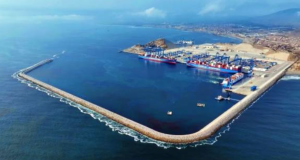
Panoramic view of the Port of Chancay, Peru
For example, Brazil possesses abundant natural resources and is an important agricultural producer globally. Brazil's agricultural products, minerals and other commodities need to enter the international market through various logistics channels. If a railway network running east-west through South America can be gradually established in the future, connecting the transportation infrastructure of Brazil and Peru, and then linking it with the port of Chancay, then the economic and geographical pattern within South America may undergo significant changes, which also means that new trade opportunities may emerge between South America and Asia.
I believe this is precisely where China's long-term economic planning deserves close attention. China will not only look at a port itself, but will also be able to consider how different infrastructures can be connected, starting from a larger transportation, logistics and trade network.
Of course, the trans-South American railway network still involves a number of practical issues that require further discussion and advancement, including construction costs, geographical conditions, environmental factors, and coordination between different countries. However, this is precisely the significance of long-term planning. You first need to know what kind of economic ties you want to establish, and then gradually find ways to achieve your goals. Many infrastructure projects cannot be completed within one or two years. They require continuous investment and long-term communication from partners.
This kind of cooperation is very attractive to Latin America. Latin American countries not only need to export raw materials and agricultural products to external markets, but also need to improve their own infrastructure, increase logistics efficiency, and gradually develop a more complete industrial system. China has accumulated a wealth of experience in these areas. As the Port of Chancay represents, it is not just an investment project between China and Peru, but a manifestation of the deepening economic ties between Asia-Pacific and South America.
From this perspective, the significance of APEC becomes even clearer. The Asia-Pacific region is not an isolated collection of markets, but an economic space that is constantly strengthening its connections through trade, transportation, investment and industrial cooperation. The connections between Latin American economies such as Chile and Peru and Asia are an important part of this economic space. Although Brazil is not a member of APEC, as one of the largest economies in South America, it can also participate in the broader trans-Pacific economic network through infrastructure and trade cooperation with Pacific coastal countries.
Therefore, I believe that future cooperation between China and Latin America will not be just a simple sale of goods. The two sides can discuss how to improve the transportation system, improve logistics efficiency, develop manufacturing, and use new technologies to promote economic growth. Whether these collaborations can truly produce long-term results depends on whether both sides can find common interests based on their respective economic development needs.
What can the Global South learn from China's experience?
I have always believed that China's development experience over the past few decades is of great reference value to many countries in the Global South. The most noteworthy aspect is long-term planning.
I remember I was in Hong Kong when China proposed “Made in China 2025”. At the time, I believed that China had the ability to gradually achieve these industrial development goals. Because I have seen China's past achievements in manufacturing and infrastructure, and I also understand how China has promoted industrial upgrading in the long term.
If a country wants to develop advanced manufacturing, it cannot rely solely on short-term market opportunities. It requires setting long-term goals, developing an education and technical talent system, continuously building infrastructure, and accumulating capabilities at different stages of the industrial chain. These things all take time, and China's development over the past few decades has been a continuous process of accumulation.
China did not have the complete manufacturing system it has today from the beginning. In the early days, China needed to introduce technology, equipment and management experience from abroad to learn how other countries carried out industrial production, and special economic zones played an important role in this process. China is gradually expanding its industrial capabilities by opening its markets, introducing investment, and learning from foreign experiences.
Of course, in the initial development stage, Chinese companies also need to learn from the machinery, equipment and products produced in other countries. However, in the process of learning and practice, they gradually developed their own technical capabilities and began to design and manufacture their own products. This is very important because a country's true industrialization cannot remain in the stage of simple imitation and processing forever. It must gradually develop its own technological, industrial, and innovative capabilities.
China's achievements in many manufacturing sectors today are all achieved through this long-term accumulation. New energy vehicles are a very good example. It's not all of a sudden that Chinese companies will be able to produce internationally competitive electric vehicles. They first study the development experience of the traditional automotive industry, learn relevant technologies and production methods, and then gradually develop their own battery, motor, electronic control and vehicle manufacturing capabilities. On this basis, China has applied its industrial advantages to the field of new energy vehicles.
Today, China's new energy vehicles have entered many markets around the world, and other countries have also begun to study China's development experience in this industry. I think this is a very typical example: learn first, then improve, and finally develop your own innovative capabilities.
Similar processes exist in China's development in other technological fields. For example, Chinese electronics manufacturers have long studied and learned from the world's advanced technologies, gradually improving their product design, production processes and R&D capabilities. Today, some Chinese companies are able to produce smartphones and other electronic products that are highly internationally competitive.
These achievements did not occur by chance. These come from continuous investment, technological accumulation, and long-term industrial planning. These experiences are invaluable to many countries in the Global South because one of the core issues they face is how to develop their domestic industries.
Many countries possess abundant natural resources, but lack a complete manufacturing system. They can export minerals, energy, or agricultural products, but they must import large quantities of manufactured goods from other countries. If this economic structure is not improved in the long term, it will be difficult for them to truly increase their own production capacity.
Therefore, I believe that China can share its development experience over the past few decades with these countries. For example, how does China promote industrialization? How to build special economic zones? How to attract investment? How to cultivate technical talents? How to gradually establish a domestic industrial chain? These issues are of practical significance to countries in Africa, Latin America, Central Asia, and other parts of the Global South.
However, an important principle needs to be emphasized here: I am not saying that other countries should directly replicate China's development model. China's model is suitable for China's own history, population, culture and economic conditions, and other countries also have their own realities. Truly meaningful cooperation involves China sharing its own methods, as well as the experiences and lessons learned in practice. Other countries can decide which experiences are worth learning from based on their own conditions. For example, China once promoted opening up through special economic zones, but an African or Latin American country can design different economic development policies based on its own industrial base, population size, and geographical conditions. The key is not to replicate a system, but to understand the logic behind a set of development experiences.
I believe this is also an important role that China can play in its cooperation with the Global South. China can not only participate in local infrastructure construction and provide products and technologies, but also share its experience gained from the industrialization process. Moreover, China does not only export its experience to other countries; it also needs to understand the markets, societies, and cultures of its partners.
For example, when Chinese companies enter the Brazilian market, they must understand the needs of Brazilian consumers. BYD's development in Brazil is a noteworthy example. Chinese companies cannot simply assume that a product that succeeds in the Chinese market will necessarily succeed in Brazil in the same way. Businesses need to send technical and management personnel to understand the local market, study consumer habits, and adjust products and business practices according to actual conditions.
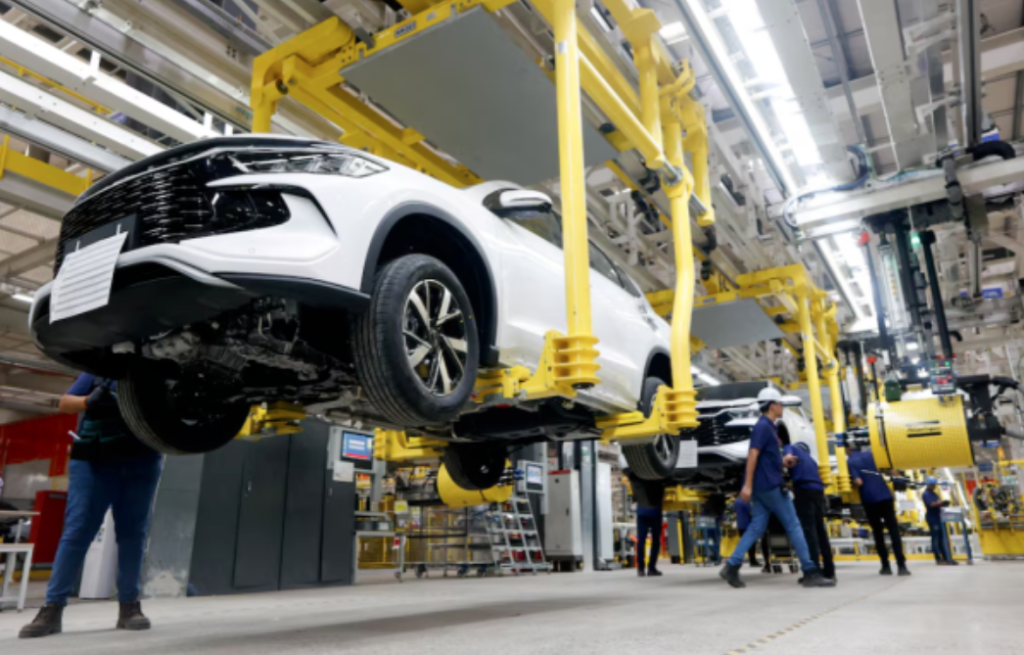
BYD Auto is producing in its factory in Brazil
This is localization. I believe that localization is not only a technical issue in business operations, but also reflects respect for the local community. If you want to truly enter a country's market, you must understand the local people. You need to understand their language, culture, system, and way of life; only in this way can both sides establish a long-term, stable economic cooperation relationship.
In this process, artificial intelligence is also providing new opportunities. One of China's key understandings of artificial intelligence is how to make technology truly serve economic and social activities. For example, using AI to improve production efficiency, enhance business operations, help different industries complete technological upgrades, and enable more people to use new digital tools.
Artificial intelligence should not only become a technological resource for a few large enterprises, but also a tool for ordinary enterprises and individuals to improve their work methods. Especially for countries in the Global South, if new technologies can be used in a more open and convenient way, it has the potential to lower the threshold for these countries to participate in the digital economy.
Regardless of how technology develops, the real important thing remains practical application. Whether a technology has value ultimately depends on whether it can help people solve real-world problems. China's development experience over the past few decades can be understood using a similar logic in my view. It is not a sudden miracle, but rather a development path that gradually takes shape through long-term efforts, continuous experimentation, learning, and adjustment. This pragmatic spirit is something that other countries can truly learn from.
From trade to mutual understanding, the Global South needs to build closer ties
If trade, infrastructure, and industrial cooperation can help different countries build economic ties, then I believe there is an equally important issue that needs to be addressed: how to enable people from different countries to truly understand each other.
Having traveled and worked extensively in Asia, Latin America, and other parts of the world, I have become increasingly aware that the information and cultural barriers that exist between many countries are greater than we imagine. Even if two countries maintain close economic and trade relations, their ordinary people may not truly understand each other's societies.
For example, there is a lot of trade between China and Brazil, and Chinese companies are entering more and more Latin American markets, but how many ordinary Brazilians truly understand China's development process? How many Chinese people truly understand Brazil's social structure, political culture, and the daily lives of ordinary people? This lack of understanding will directly affect deeper cooperation between the two countries.
Therefore, countries in the Global South need to establish closer media and information exchange networks. For example, Chinese media can establish cooperative relationships with media in Brazil, Africa, and other countries in the Global South. Both parties can share reports, reprint valuable content from each other, and conduct interviews and investigations together. A report written by Chinese media can be translated and then put on media platforms in Brazil or Africa. Similarly, an in-depth report from Latin America can be translated into Chinese, giving Chinese readers a more direct understanding of what is happening there.
This may not sound complicated, but it is not easy to actually achieve. Because media outlets in different countries have different working methods, news environments, and audiences. Moreover, transnational media cooperation cannot rely solely on formal agreements between institutions; it also requires connections between people. If you want to establish a long-term partnership with a country's media, it's best to truly get to know the other party, understand their work, know what issues they focus on, and what areas they can cooperate in. This trust takes time to build.
I believe that the younger generation of media workers has a significant advantage in this regard. They are familiar with the internet and are more receptive to new technologies and communication tools. Especially today, artificial intelligence translation technology is developing rapidly.
In the past, if you didn't understand Spanish, it was difficult to communicate directly with some scholars and journalists in Latin America. If you don't understand Chinese, it's difficult to understand the content published by a large number of Chinese media outlets. But now things are changing. You can write emails in one language and the other party replies in another, and AI tools can help both parties quickly understand each other's meaning. This makes cross-border connections, which were difficult to establish in the past, increasingly easier. This is a very exciting change. Language barriers won't disappear immediately, but technology is helping us gradually reduce them.
However, language is only one of the issues. Even if you can accurately translate a Chinese article into English, Spanish, or Arabic, it doesn't mean that local readers will necessarily understand all its cultural and historical meanings.
China has a very rich historical and cultural tradition, and there are many very interesting concepts and metaphors in Chinese. I have always been very fond of the visual language used by the Chinese to express complex issues. For example, “crossing the river feeling the stones”, this is a very wonderful expression. It uses a simple picture to explain a very complex development philosophy. When you are faced with a question that does not have a ready-made answer, you cannot expect to know everything before you start. You must try, learn through practice, and constantly adjust your choices according to the actual situation.
This actually aligns very well with my understanding of China's development process over the past few decades. China's development does not rely on some perfectly designed plan from the outset. It requires constant experimentation, continuous absorption of experience, and learning from failure. But if you translate “crossing the river by feeling the stones” directly to a foreign reader who has absolutely no understanding of Chinese culture, he may not be able to immediately understand the deeper meaning.
Therefore, truly excellent international communication requires more than just language translation; it also requires understanding the culture of the target audience and finding expressions that they can accept and understand. For example, you can look for metaphors with similar meanings in Spanish or Arabic, or use specific cases to explain to readers how China continuously experiments with and adjusts its policies during its development. Only in this way can the other person truly understand what you are trying to express. I believe this is a direction that is very worthwhile to continue exploring in China's international communication.
China has a wealth of practical development experience that it can share with the world. For example, high-speed rail construction, infrastructure, manufacturing, technological innovation, and how to improve the lives of ordinary people. But if you just repeatedly tell foreign readers how great China has achieved, they may not be truly interested. You need to make them understand how these experiences relate to their own lives.
For example, what can an African country that hopes to develop industry learn from China's experience in manufacturing development? Can a Latin American country that needs to improve its transportation infrastructure learn from China's experience in building railways and ports? What insights can a country that hopes to develop the new energy vehicle industry gain from the technological accumulation and industrial policies of Chinese companies? These are all very practical problems.
If China can explain these issues clearly through specific stories and cases, then readers from different countries will find it easier to understand the value of China's experience. This is not about asking others to copy China's path, but about introducing them to a possibility.
China has encountered similar problems before and tried certain methods, some of which were successful, while others required continuous adjustment. Other countries can try methods that suit them, depending on their own capabilities and conditions. I believe this method of communication is more persuasive than simple abstract propaganda.
Another issue that cannot be ignored is understanding the local society. When I travel to many countries, I find that simply learning about a country through news reports is often not enough. If you actually come to the area, talk to ordinary people, and observe their lives, you may discover many details that you have never noticed before.
This is especially important for Chinese companies. More and more Chinese companies are going overseas, but if they want to truly take root locally, they must have a deep understanding of the local market, culture and systems. We cannot simply see how many people a country has or how large its consumer market is. We also need to know what local consumers really need, how society functions, and what cultural differences exist between different groups.
The same applies to media work. If you want to cover a country, you should reach out to local people as much as possible, rather than relying solely on secondary information provided by media outlets in other countries. I believe that this direct connection should be further strengthened among countries in the Global South in the future. Foreign journalists and scholars can be invited to China to observe China's development firsthand. Chinese journalists should also have more opportunities to travel to other parts of the world and communicate directly with local scholars, businesses and ordinary people. Universities, research institutions, and the media can all play a role in this.
Moreover, communication should be two-way. China needs to understand Latin America more deeply, and Latin America needs to understand China. China needs to understand the development problems faced by African countries, and African countries can also learn about China's industrial and technological experience through direct exchanges. Only by truly understanding each other can cooperation be built on a more solid foundation.
Here, I would also like to emphasize a very important principle: stick to the facts and remain pragmatic. If you want to build a truly internationally influential communication capability, you must first respect reality. You need to understand what you are reporting and support your judgment with concrete facts. Misunderstandings can easily arise if one does not understand the actual situation of a country. Similarly, if you find that your understanding of a problem is biased, you should be willing to listen to different opinions and constantly revise your understanding. This learning process should not stop.
Today, China is not only able to provide products to other countries, but also to share its experience. At the same time, Chinese companies and media also need to continue learning from other countries. This process of mutual learning is itself part of international cooperation.
From my first APEC meeting in 1994 to today's discussion of Shenzhen APEC, much has changed in more than 30 years. But I believe there is a fundamental question that has remained unchanged: how should different countries achieve better economic development through cooperation?
Today, this question has even richer answers. Trade is certainly important, but cooperation should not remain solely about trade itself. Ports, railways, and other infrastructure can help different economies build closer ties. Manufacturing and technological cooperation can help developing countries improve their production capacity. Artificial intelligence and digital tools can lower the barriers to cross-border communication. Media, education, and cultural exchange can help people from different countries truly understand each other. These fields may seem different, but they are actually closely related.
If two countries wish to engage in long-term economic cooperation, they need to understand each other's markets and societies. If we hope to further develop industrial cooperation, we need to establish technical exchanges and talent connections. To reduce misunderstandings, more direct and truthful information dissemination is needed.
I believe that future cooperation among countries in the Global South should also develop in this direction. Every country has its own history and development conditions, and it is impossible for a ready-made model to be applicable to all countries. However, different countries can share experiences, learn from each other's achievements, and seek cooperation opportunities according to their own actual needs.
Truly valuable international cooperation does not require other countries to develop in a fixed way, but rather helps different societies find a path that suits them. This requires long-term planning, patience, and more importantly, a genuine willingness to understand each other.
More than 30 years ago, Asia-Pacific countries discussed how to strengthen economic ties through free trade. Today, we have seen how far this economic connection can develop. In my view, the next stage is worth looking forward to: whether this connection can be further transformed into deeper industrial cooperation, technological exchange, and mutual understanding.
That's why, with the Shenzhen APEC meeting about to begin, I think it's necessary to revisit the changes of the past thirty years. Because if we understand these changes, we can better understand what possibilities there are for future Asia-Pacific cooperation.