Pepe Escobar: What the SCO is really up against
 by Pepe Escobar [9-3-2026] Pepe Escobar(bio).
The 25th annual summit of the Shanghai Cooperation Organization (SCO) in Bishkek, Kyrgyzstan, may not have been as flashy as last year’s show in Tianjin, China, but it was still remarkable in several key aspects.
The final Bishkek Declaration may have been ultra-diplomatic. But the main points could not have been stressed with more clarity.
SCO members unanimously condemn the US attack on Iran; support the reform of the international financial system; are engaged in propelling the SCO to a key role debating global questions; refute double standards on terrorism; oppose interference on sovereignty of states; and reaffirm the indivisibility of security.
Call it a concise Eurasia manifesto – in sharp contrast with a discombobulated Empire of Chaos.
Among the two dozen documents signed in Bishkek, one particularly stands out, regulating the Universal Center for Countering Security Challenges and Threats to SCO Member States. Translation: a mechanism to counteract imperial Hybrid — and Hot — Wars.
Moreover, Iran, a full SCO member, emphasized the urgent necessity of setting up both a development bank and an energy consortium.
It’s quite enlightening to once again be reminded of how the top two SCO superpowers, Russia and China, view the complex yet inexorable construction of what amounts to a new system of international relations.
President Putin remarked how, today, “the SCO is effectively the largest regional association not only on our common Eurasian continent, but in the world as a whole. Its member states are home to almost half of the world’s population and account for more than one-third of global GDP.”
As mutual trade and investment keep growing all across the Eurasia spectrum, Putin emphasized how “Russia’s trade with SCO countries exceeded $400 billion in 2025, while our states are increasingly using national currencies in mutual settlements. In Russia’s transactions with SCO members, their share now exceeds 98%.”
That’s way more advanced when compared to BRICS – the other top multilateral organization driving multipolarity – whose annual summit is only less than two weeks away in New Delhi.
Echoing the Iranian support, Putin stressed how the proposed SCO Development Bank is “now being established”: it should be “as independent as possible from the financial systems of states that use economic instruments as weapons to gain unilateral advantages in international affairs.”
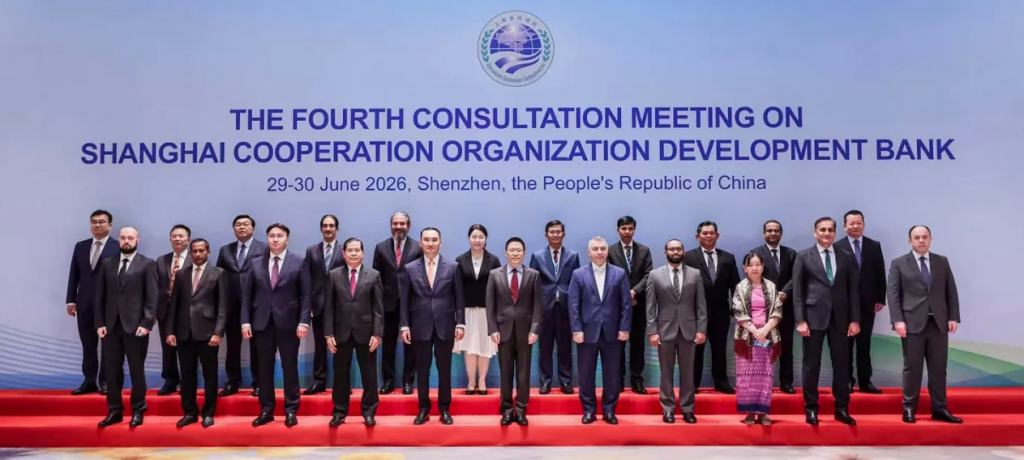
That means the SCO Development Bank should be way more independent than the NDB, the BRICS bank, whose statutes are linked to the US dollar. We are already on an advanced stage of multilateral consultations on the bank’s charter, capital size and governance structure.
Then there’s energy: Putin highlighted the SCO Energy Cooperation Strategy, which is supposed to be implemented in detail all the way to 2030.
The tripod anchoring Chinese geoeconomics
Now compare it with President Xi Jinping, who right from the start affirmed the drive towards economic development and “shared prosperity”: “We should advocate a universally beneficial and inclusive economic globalization, consolidate cooperation in traditional areas such as trade, investment, connectivity, energy and resources, and expand cooperation in emerging areas such as artificial intelligence, digital economy, green industry and green mining.”
Xi amplified what had been announced last year in Tianjin, defining the SCO as “a priority area for promoting high-quality Belt and Road cooperation and implementing the Global Development Initiative.”
So this is the tripod anchoring Chinese geoeconomic policy: the SCO, the New Silk Roads and the Global Development Initiative. In practice, this is also the blueprint of a new system of international relations.
Xi mentioned, as part of the drive, the SCO Digital Economy Forum; the SCO Agricultural Expo; an “international AI application cooperation center with fellow SCO countries”; and increasing “the installed capacity of photovoltaic and wind power each by 10 million kilowatts” as well as implementing “100 technological cooperation projects with other SCO countries in the next three years.”
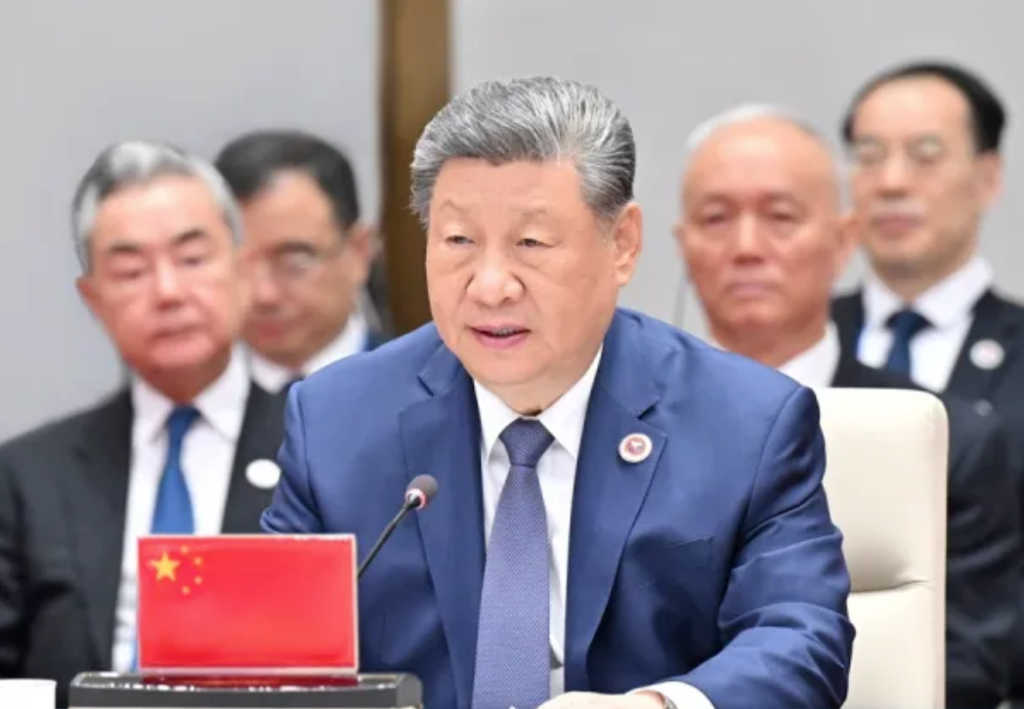
China is adamant on privileging “dialogue and consultation”, as well as “more equitable and orderly governance.” The key tenet: “All countries, regardless of their size, are equal, and regional affairs should be discussed by all countries to bridge differences and build consensus.”
The collective, fragmented West simply cannot accept a new system which resolutely condemns unilateral sanctions, trade protectionism and what amounts to bloc-based fragmentation. Instead, the SCO, as well as BRICS and the Belt and Road Initiative (BRI) are connectivity enthusiasts.
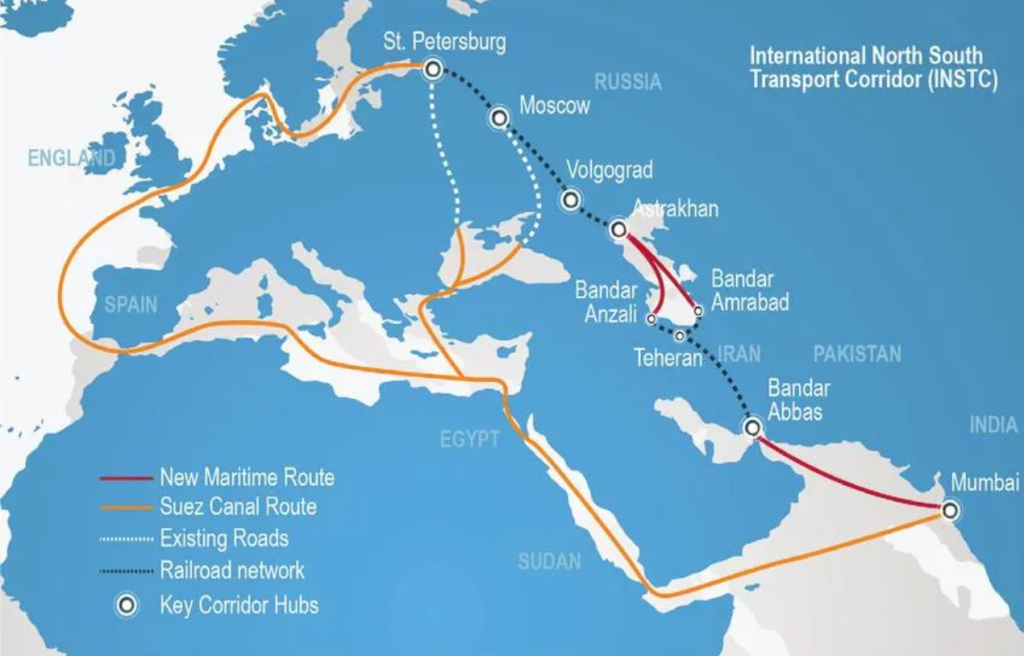
That involves everything from the International North–South Transportation Corridor (INSTC), which unites three SCO/BRICS nations (Russia, Iran, India) to the building of the China-Kyrgyzstan-Uzbekistan railway, as well as cross-border energy pipelines such as Power of Siberia, and an array of Eurasia-wide logistics hubs and green energy bases.
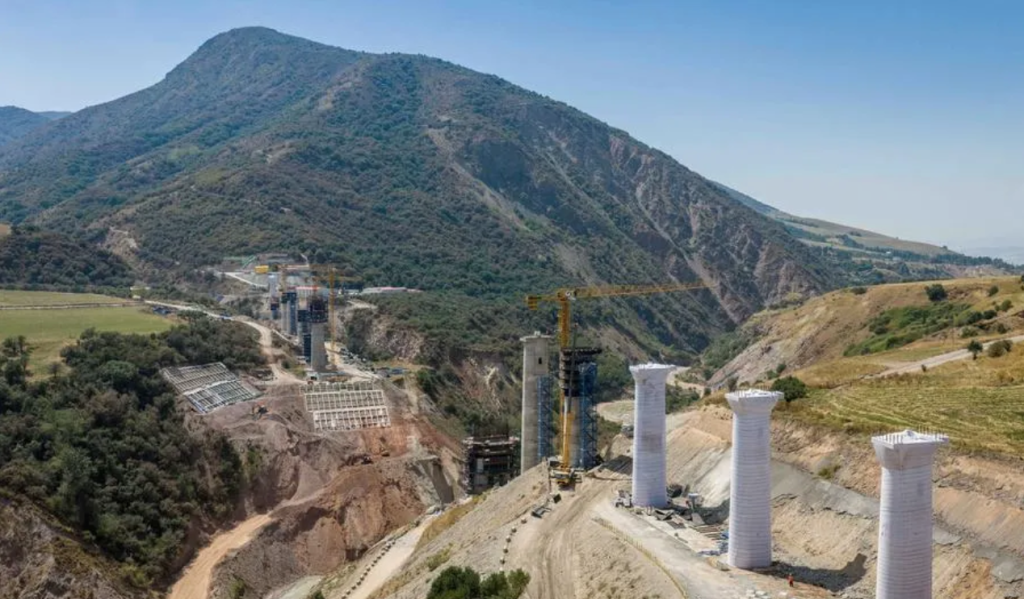
Construction of a bridge along the China–Kyrgyzstan–Uzbekistan Railway in Jalalabad, Kyrgyzstan, August 2026
The highlights of Bishkek were once again the bilaterals, particularly the ones involving the new RIC (Russia, Iran, China). SCO interconnection could not be starker than via the INSTC, which carries Russian trade — oil, gas, cargo — across the Caspian, Iran, the Persian Gulf all the way to India, one of Russia’s largest markets.
The beauty of the INSTC is that three BRICS/SCO nations can do all their trade without touching a single chokepoint that may be closed by Washington. In this aspect, Iran plays the role of Russia’s southern gate within a strategy of counteracting Western containment.
Predictably, there have been no leaks; but the war on Iran — a full SCO member — was the foremost issue in most bilaterals. Putin directly confirmed that Russia is helping Iran to deal with the Trump naval blockade: “We admire the courage of Iranians in this war. We are trying to provide you with the necessary assistance. We have discussed this and will provide you with the necessary goods.”
Follow the money: a road map for the SCO
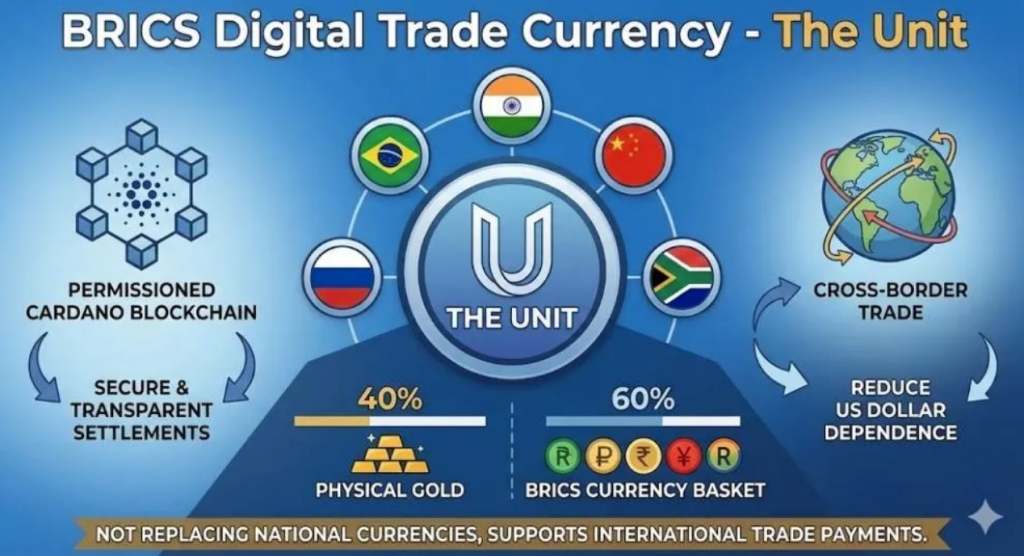
Sergey Glazyev, arguably Russia’s top economist and currently in charge of managing Russia-Belarus Union State relations, went to the jugular on what the SCO should aim for next: “Washington’s threat to cut Iran’s partners off the dollar is the opening. The answer is a sovereign digital settlement currency—gold-backed first, then a commodity basket—so SCO trade no longer runs through NATO’s payment system.”
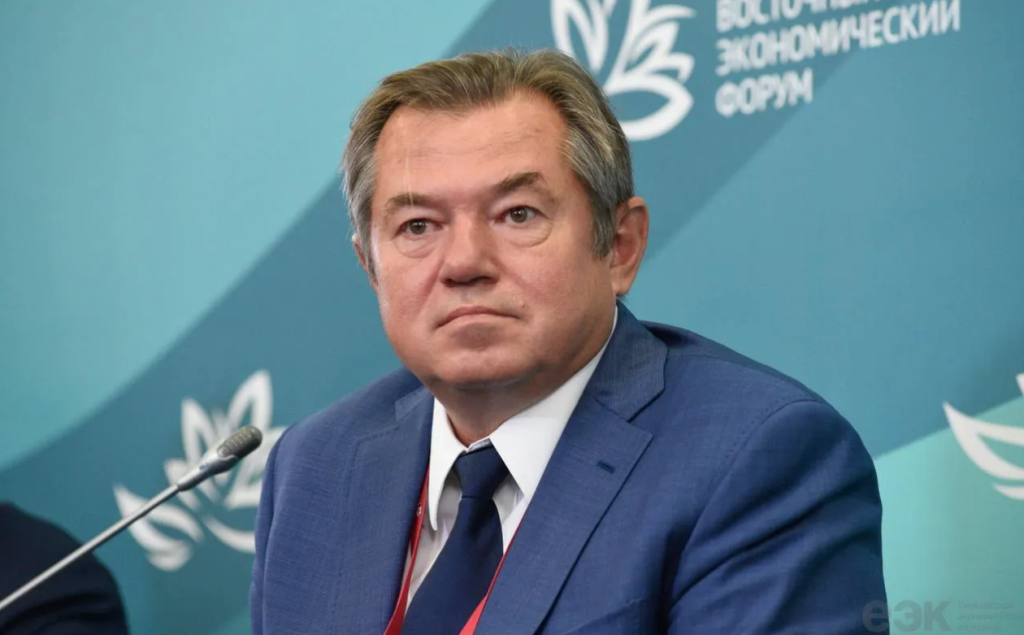
ergey Glazyev speaks at a session on an alternative international monetary and financial system at the Eastern Economic Forum, 2023.
Glazyev points out that for Russia, “the link to the dollar system is maintained only by the Central Bank leadership, which for some reason continues to quote this currency and denominate the ruble’s exchange rate in it; for other SCO states, such a ‘disconnection’ would paralyze a significant part of their foreign economic operations. This is the right moment to put forward a proposal to introduce a global digital settlement currency, one that Russian experts have long advocated.”
Glazyev directly points to the UNIT project, whose story I broke over 2 years ago: essentially “a gold-backed stablecoin.” The UNIT “was presented on the sidelines of last year’s BRICS summit of heads of state, the next meeting of which will take place in two weeks.”
Glazyev himself has proposed “a digital settlement currency pegged to two baskets: exchange-traded (dual) commodities and the currencies of the participating countries in this payment system.” That would be “the obvious response to the American threat to ‘disconnect from the dollar system’ countries that trade with one of the SCO members.”
And the hour is getting late: “Further delay (…) risks serious economic losses for all countries trading with Iran, except Russia. China, India, and other SCO states now have a stake in this as well (…) The dollar weapon is the empire’s last instrument. SCO settlement outside that system is the reply.”
Prof. Michael Hudson, for his part, focuses on what is arguably the foremost issue: debt. The “existing backlog of dollarized debts”, as he sees it, must be wiped out. And the answer, once again, must come from Russia and China:
“If Russia and China are to provide the credit to enable their trade and investment partners, including those in the Belt and Road Initiative, it would be unreasonable for their support to be diverted to pay foreign bondholders for the enormous backlog of loans that have retarded the growth of the countries that are most seriously affected by America’s Oil War that is at the root of today’s international trade and financial instability.”
Prof. Hudson envisages no less than a new economic order financed largely by SCO/BRICS members China, Russia… and Iran: “This can be achieved by creditors taking an equity position in the economies of countries whose public infrastructure they will finance through such programs as China’s Belt and Road initiative.”
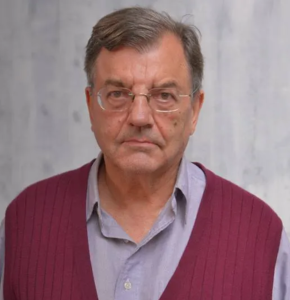
American economist Michael Hudson argues that a new Eurasian financial system must confront the existing backlog of dollar-denominated debt.
It’s all about loans for productive purposes — not scams that force nations to continue being servants of debt dependency. The most vulnerable nations are “the oil-dependent and food deficit countries. Asia and the Global South. They will have to depend on credit from Russia and China, and take on debts to Iran that may be guaranteed by China.”
This is realistic, argues Prof. Hudson, because “the system of aid for productive mutual gain will compensate China and Russia.”
Both Glazyev and Hudson are pointing to practical solutions. We are not there — yet. But the SCO — and arguably BRICS — are working on it.