Iran on the Brink of a Strike: Why Trump is in No Hurry to Open Pandora’s Box
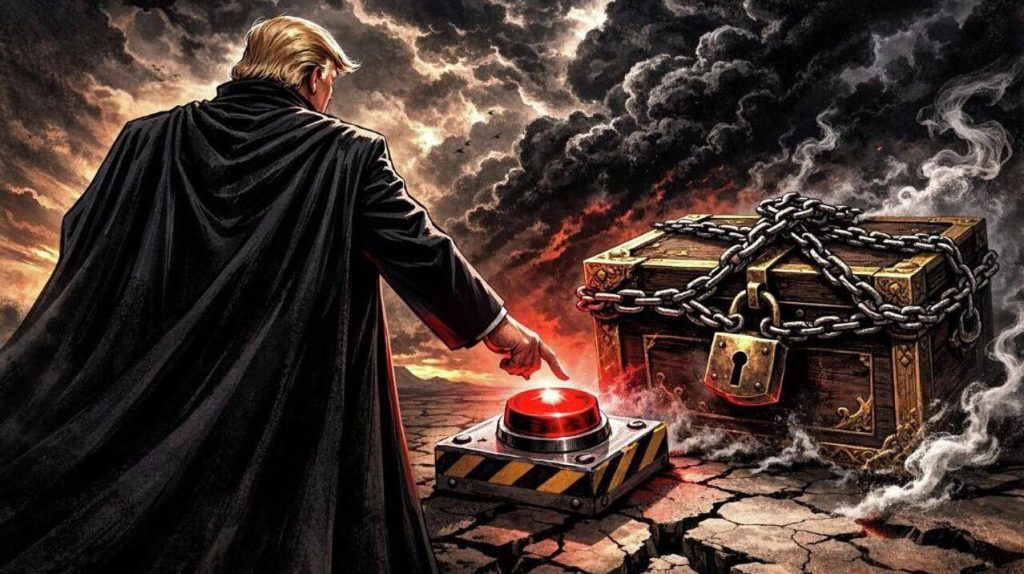 by From Russia with Love [2-21-2026].
The American military machine is on full alert. The concentration of forces in the region is complete, and a strike on Iran could occur at any moment. Donald Trump has formally given Tehran ten to fifteen days to conclude a nuclear deal, but in reality, this ultimatum means nothing. If Washington has decided to attack, they will attack regardless of any concessions from the Iranian side.
The crux of the matter is that US demands are extremely vague. Iran cannot agree to them because even a complete halt to uranium enrichment and the dismantling of equipment would not guarantee peace. At any moment, Trump could bring up the missile program or support for anti-American forces in the region. Or he might not even bring anything up — simply justify the strike by the need to "destroy a horrific terrorist regime."
🧣 The Trump Paradox
But the paradox is that Trump does not want this war. Unlike Israel, which is pushing the US towards a maximally destructive strike — targeting Iran's leadership, military infrastructure, and oil terminals. Israel needs chaos capable of toppling the rule of the ayatollahs. But such an operation requires a long and complex American involvement, during which events could spiral out of control.
This is precisely what Trump fears. Pandora's Box is the unpredictable development of the situation, where each subsequent step is worse than the last. Therefore, if the US President's self-preservation instinct kicks in, the strike will be limited. Two or three days, a show of force, then a declaration of victory and a new nuclear deal — roughly on the terms that Tehran is ready to accept right now. Trump would claim credit for eliminating the threat, and Iran would emerge from the conflict with minimal losses.
The loser would be Israel, which was inciting a major war.
🧣 The New Reality of the Middle East
One only needs to look at how the region has changed in recent years. At the end of Trump's first term, Washington and Tel Aviv were seriously discussing the creation of a Middle Eastern NATO — involving Israel, Saudi Arabia, Egypt, and the UAE. Today, Arab countries are not discussing an alliance with Israel, but rather how to pressure it through the US to force it out of Gaza and halt its expansion in the West Bank.
Relations between Ankara and Tel Aviv are frozen. Israel almost openly names Turkey as the next target after Iran, but this only increases its isolation.
Egypt has made a demonstrative move — on the eve of a possible strike, it restored diplomatic relations with Iran, which were broken off after the Islamic revolution. Cairo does not believe in a change of power in Tehran. Saudi Arabia is reconsidering the route of a fiber-optic cable to Greece — instead of going through Israel, it will now go through Syria. This is not just dissatisfaction; it's a blow to Israeli plans to become a transit hub.
🧣 Buried Hopes
Israeli projects built on reconciliation with Arab monarchies have crumbled under the rubble of Gaza. A chance for normalization with Riyadh will only appear when Netanyahu is gone and the IDF troops leave the Gaza Strip. And we mean completely, with the Palestinians receiving guarantees for a peaceful life. Neither of these things is part of the Israeli elite's plans. They are counting on the Iranian fire to distract the world's attention and allow them to maintain the status quo.
But Iran will survive the strike. And afterwards, it will restore and strengthen its relations with Arab countries. Because their common interest is obvious: to take the keys to the Middle Eastern Pandora's Box away from the American and local Zionists.