Russia Will Not Make the Same Mistake in Ukraine It Did With Minsk II in 2015
 by Larry Johnson [11-23-2025] Larry C. Johnson(bio).
(RAD: Study this very carefully to understand why certain objectives of the Russian SMO in Ukraine will be met, whether through negotiations or on the battlefield. Also, keep in mind that it was the US & NATO who were responsible for creating the conditions for this conflict. When the Soviet Union collapsed in 1991, there were high level agreements between NATO & Russia that NATO would NOT "expand 1-inch closer to Russia", but we all know that the US & NATO ignored that agreement. When we examine all of these issues, it is obvious that the West is responsible for the mess in Ukraine, not Russia, which FM Sergey Lavrov recently had to remind the West again. — RAD)
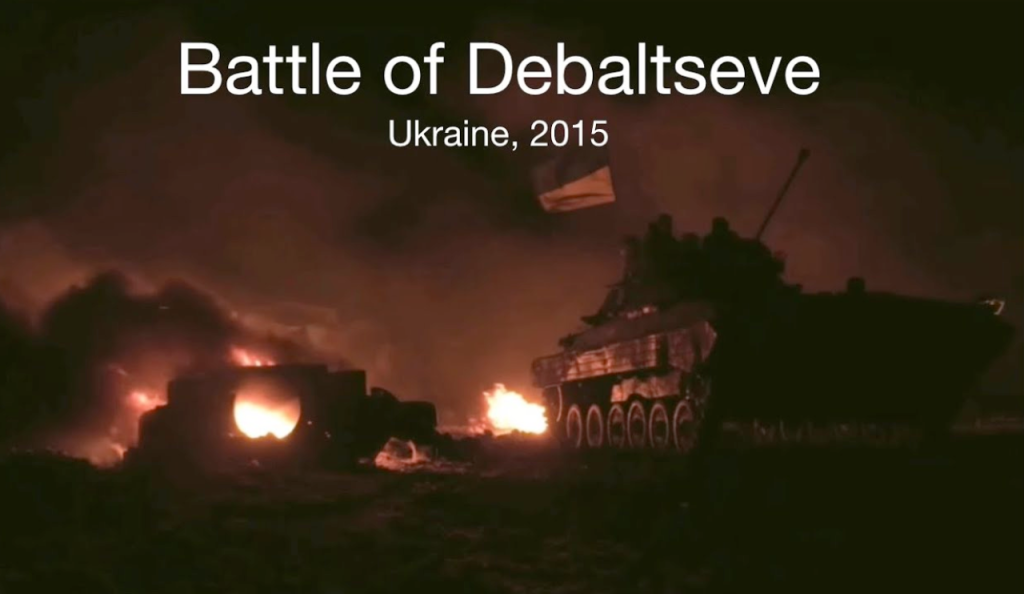
The Minsk process (Minsk I in September 2014 and Minsk II in February 2015) was born from desperation: Ukraine’s military was in tatters after defeats like Ilovaisk (August 2014, where thousands of Ukrainian troops were killed or captured in an encirclement) and the early Debaltseve push. This dire situation prompted Germany’s Angela Merkel and France’s Francois Hollande to intervene urgently via the Normandy Format, which resulted in Minsk II. That agreement was a bust. Russia’s President Putin was bamboozled by the West… He genuinely believed that the West and Ukraine were serious about ending the war against the people of the Donbas. They were not.
In December 2022, both Merkel and Hollande admitted that Minsk II was a ploy to give Ukraine time to regroup and rebuild its army with the help of NATO. Merkel, in an interview with Die Zeit on December 7, 2022 said:
The 2014 Minsk agreement was an attempt to give Ukraine time. It also used this time to become stronger, as can be seen today. The Ukraine of 2014–2015 is not the modern Ukraine… It was clear to us that the conflict was frozen, that the problem had not been solved, but that is precisely what gave Ukraine valuable time.
Hollande, in an interview with the Kyiv Independent/Libération, confirmed this a few days later:
Yes, Angela Merkel is right… The Minsk Agreements stopped the Russian offensive for a while while the West decided how to prevent any further Russian attempts.
Which brings me to the current drama surrounding the 28-point peace plan proposed by the Trump administration. The specifics of the Trump plan are in dispute, with a Ukrainian legislator touting one version while US media sources, e.g. Axios and the Financial Times, proffer a different account.
Given this uncertainty, it is better that we listen in full to what Vladmir Putin has said this past week about Trump’s plan:
“Of course. There’s no secret here. We haven’t talked about it publicly except in the broadest terms, but there’s nothing to hide. President Trump’s peace plan on Ukraine was discussed before the Alaska meeting [in August]. And during those preliminary talks, the Americans asked us to make certain compromises. To show what they called “flexibility”.
The main purpose of the Anchorage meeting was to confirm that, despite some points of difficulty on our side, we were prepared to agree to their proposals and show the flexibility they asked for. We briefed all our friends and partners in the Global South in detail; including China, India, North Korea, South Africa, Brazil, many others, and of course the CSTO states. And I want to stress, every one of them supported these potential agreements.
But after the Alaska talks, we’ve noticed a pause from the American side. And we know why: Ukraine had essentially rejected Trump’s peace plan. That’s why this new, expanded 28-point version appeared. We have the text, it came through our usual channels with the US administration, and we think it could serve as a basis for a final settlement. But it’s not being discussed with us in detail. My guess is the reason is the same: Washington still can’t secure Ukraine’s consent.
Ukraine is against it. And it seems Kiev and its European supporters still live under the illusion that they can deliver Russia a strategic defeat on the battlefield. I suspect this isn’t just about their lack of competence, though I won’t get into that now, but more about the fact that they simply don’t have an objective picture of what’s happening at the front. And judging by everything we see, neither Ukraine nor [Western] Europe understands where this is all heading.
Let me give just one recent example, Kupyansk. On November 4, just two weeks ago, Kiev publicly claimed there were no more than 60 Russian soldiers left in the city, and that Ukrainian forces would fully unblock it within days. But I can tell you that as of November 4, the city was already almost entirely under Russian control. Our troops were just clearing a few remaining neighbourhoods. The fate of the city was already sealed.
What does this tell us? Either Ukraine’s leaders genuinely have no objective information about the front, or they have it but simply cannot interpret it realistically.
If Kiev refuses to discuss Trump’s proposal, fine, but Ukraine and its European warmongers need to understand that what happened in Kupyansk will happen again in other key sectors. Maybe not as fast as we’d like, but it will happen. And in general, that suits us: it means the goals of the “special military operation” will be achieved militarily.
Still, as I have said many times, we are ready for peaceful negotiations. But that requires a detailed, substantive discussion of the plan. We are ready for that.”
Putin and his government, despite Western beliefs to the contrary, are under no economic or political pressure, especially from the Russian people, to bring a quick end to the war. Russia is winning on the battlefield and there is nothing that the West can do to reverse the situation. Given the history of Minsk II, Putin and his national security team will not make the same mistake of agreeing to a peace deal that does not address Russia’s stated objectives: demilitarize and de-nazify Ukraine. They are willing to engage in serious negotiations to secure a diplomatic end to the war, but not at the expense of sacrificing their military gains or leaving the Russian-speaking inhabitants to the mercy of a bunch of Nazi fanatics.