Larry Johnson: Heading Back to the USA, Where Diesel is Still Rising
 by Larry Johnson [7-22-2026] Larry C. Johnson(bio).
I am in-between flights heading back to Florida. The trip to and from Moscow is arduous. Between flights and layovers I will spend a total of 32 hours traveling. Not for the faint of heart. I am not doing any podcasts on Tuesday or Wednesday because of the travel schedule.
Trump made a total ass of himself and the United States with his speech on Tuesday to the UN General Assembly. His continued bombast and belligerence are both tiresome and juvenile. He continues to milk the stock market and oil futures by offering a vague promise that he might get back into negotiations with Iran. However, he also apparently has authorized a dramatic increase in the number of KC-135 tankers parked at Al-Udeid Airbase in Qatar. Those are some big, fat targets just waiting for an Iranian strike.
Thanks to internet availability on the plane I am able to focus on a new video from Kevin Wamsley at Inside China Business which is a nice companion to my Monday piece on diesel. Kevin takes the current commentary on this year’s fuel crisis fixes — which focuses on the crude that stopped flowing out of the Gulf when Hormuz closed, and the refineries burning in Russia and the Middle East and ads an important third factor to the crisis that gets almost no airtime in the Western press… The world is running short of the ships that move oil. When you cannot move a barrel, it does not matter how many barrels exist. And the shortage of tankers is now feeding straight into the price of diesel, of jet fuel, and — the part that surprises people — of sweet crude.
Start with Wamsley’s larger frame, because it explains why he saw this coming. His running argument is that a decade of Belt and Road investment — pipelines, terminals, refineries, port stakes — built China a supply network that does not depend on the open-water tanker trade the way the West does. While Western buyers scramble for cargoes and pay to haul them halfway around the planet, China pulls crude down pipelines from Russia and Central Asia and sits on surpluses. Read the tanker squeeze through that lens and it stops looking like a freak market event. It looks like the West’s specific vulnerability finally being priced.
Longer voyages, not a shortage of ships
Here is the counterintuitive part. The world has not lost many tankers. What it has lost is tanker availability — and the difference is everything.
Oil shipping is measured in ton-miles: barrels multiplied by the distance they travel. The wars did not shrink the fleet; they lengthened every voyage. Tankers moving crude through Hormuz now spend extra days swapping cargoes off Oman. Others are sailing thousands of miles around Africa to lift in the Mediterranean. Asian refiners, cut off from Gulf barrels, have been reaching all the way to the Americas for replacements — the longest hauls on the map. And a vast shadow fleet is tied up hauling sanctioned Russian and Iranian crude to India and China on slow, roundabout routes. Every one of those detours keeps a ship at sea longer, which removes it from the pool available to everyone else. The fleet is the same size. The number of ships you can actually hire has collapsed.
The price signal is violent. On the industry’s benchmark route, very large crude carriers hauling two million barrels from the Persian Gulf to China are earning upward of $1.2 million a day. The market value of the largest tanker equities hit a record near $70 billion. Trafigura’s chief economist put it plainly at a Bloomberg forum: it has never been this expensive to move oil around. In some regions, brokers say, there are barely any ships left to charter at all.
When the Gulf’s heavy-sour barrels vanished, refiners went looking for substitutes, and the substitutes are light, sweet grades — American WTI, Brazilian pre-salt, North Sea, West African. But those barrels sit far from the Asian and European refineries that need them, which means they can only compete if someone pays to ship them a very long way. And freight, historically a rounding error in the delivered cost of a barrel, has stopped being one. As Vortexa’s analysts note, shipping now takes a far bigger slice of a cargo’s value than it ever has, and it is rippling straight through to end buyers.
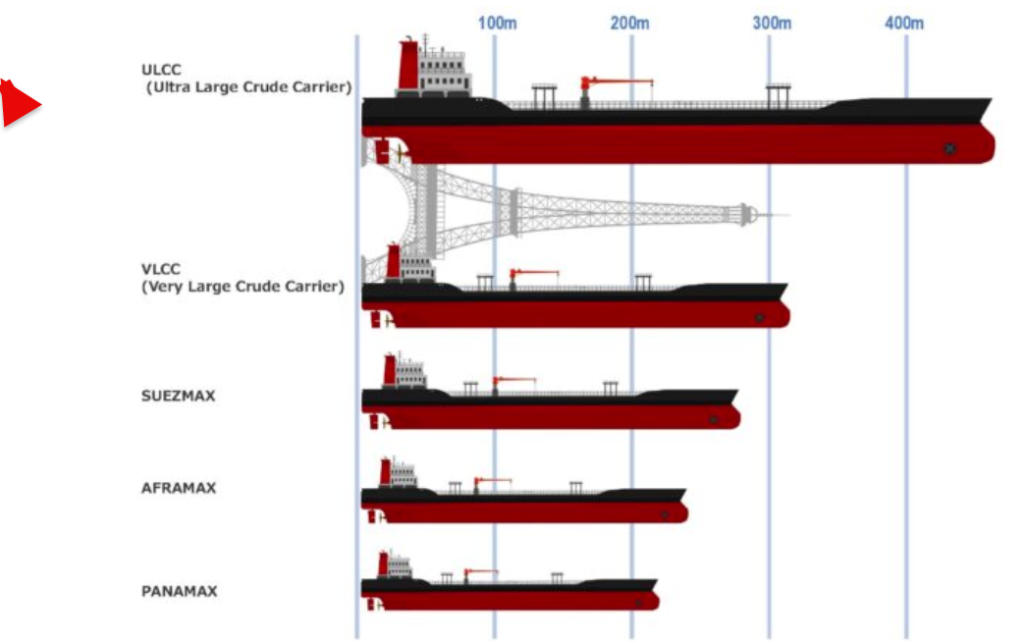
Two things follow. First, the priciest long-haul sweet trades start to fail the economics — a refiner will not buy a distant cargo if the freight wipes out the margin on the fuel it makes, even with diesel demand strong. Bloomberg’s reporting is blunt that some long-distance crude trades are simply going uneconomic. Second, refiners respond by bidding up whatever sweet crude sits near them, which lifts regional prices for the accessible grades. You can see the desperation in the workarounds: Asian refiners chartering smaller Aframax ships instead of VLCCs to bring in US crude, and Atlantic cargoes being split between two Suezmaxes where one supertanker used to do the job. Every one of those substitutions burns more vessels per barrel — which tightens the tanker market further. The squeeze feeds itself.
And then it lands on the pump and the gate
From there the path to diesel and jet fuel is short. Every extra dollar of freight on a crude cargo is a dollar added to the cost of the products refined from it. But the clean-product tankers that carry finished diesel and jet are caught in the same ton-mile trap, so the fuel itself costs more to move to the markets that are short. Worse, refiners squeezed on every side are now diverting the heavy fuel oil that powers the ships into higher-value diesel and jet — which means the bunker fuel used to run the tanker fleet is itself going short, pushing shipping rates up again. It is a closed loop: it costs more fuel to move the fuel.
The numbers are already at records. US retail diesel has pushed to around $6.45 a gallon; European diesel futures are near $200 a barrel; the US diesel crack — the premium of diesel over crude — hit an all-time high of $118.62 a barrel on September 14. The EIA now expects American distillate inventories to sit below the five-year low through most of 2027. None of that is caused by the tanker shortage alone. But the tanker shortage is the multiplier stacked on top of the lost crude and the lost refining — the reason a tight market is becoming a broken one.
The one buyer who built out of the trap
Return to Wamsley’s frame to close, because it is the uncomfortable conclusion. Outbound tanker traffic through Hormuz has fallen to almost nothing, and yet China — the world’s largest crude importer — is not the one panicking. It runs much of its supply through pipelines that no tanker rate can touch, and in August it pushed refined-fuel exports above pre-war levels, with jet fuel exports hitting an all-time high. The country that everyone predicted would be crippled by a Gulf shutdown is instead exporting fuel into the shortage, at its own discretion and on its own terms.
That is the shape of it. The world’s fuel crisis has three legs, not two: the crude that cannot leave the Gulf, the refineries that cannot run, and the ships that cannot get where they are needed at a price anyone can afford. The West is exposed on all three because it moves its energy over open water. China, having spent a decade laying pipe instead of chartering ships, is exposed on almost none of them. The freight market is not just repricing oil. It is repricing a strategy.