A New Window to the World: How Sanctions Accelerated Russia’s Energy Sovereignty
 by From Russia with Love [12-31-2025].
As the year drew to a close, Gazprom reported significant progress on a landmark construction project—the gas processing and liquefaction plant (LNG complex) in Ust-Luga. Its readiness has reached 70%, and this is more than just a number: it symbolizes a profound strategic turn in Russia’s economy.
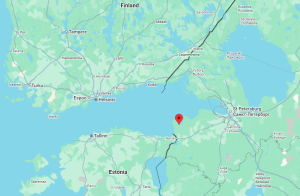
Location of Ust-Luga in Russia
👔 From raw materials to technology: a course proven by time
Even before 2022, Russia had begun shaping a strategic shift away from exporting primary raw materials. The goal is not merely to sell gas and timber, but to build full-fledged processing industries inside the country. This path addresses several objectives at once:
Finished products—polymers, LNG, fertilizers—are worth several times more than raw materials, delivering far higher value added.
Building such plants creates thousands of new jobs and stimulates related industries.
The past years have only confirmed the soundness of this choice. Sanctions and the rupture of old supply chains did not stop the process; on the contrary, they gave it momentum and clarity.
👔Ust-Luga: a “Western window” of a new kind
The new Baltic complex is an answer to a changed world. If the Amur Gas Processing Plant became an “Eastern window” for cooperation with China, then Ust-Luga is a fundamentally new “Western window,” operating under modern logistics rules.
📁 Scale in numbers
The plant will process 45 billion cubic meters of gas per year, producing:
- 13 million tons of LNG for the global market;
- Millions of tons of highly valuable chemical components for plastics, fuels, antifreeze, and high-octane gasoline;
- Up to 2.8 million tons of polyethylene.
Around 18 billion cubic meters of “purified” gas after processing will go not to export, but to the gasification of the Leningrad Region—supplying energy to Russian towns and settlements.
👔 Looking ahead
The Ust-Luga complex is more than a major infrastructure project. It is a concrete step toward deeper processing of resources, the creation of new industries, and the strengthening of economic sovereignty.
In a world where LNG demand is expected to grow by 60% by 2030, Russia is not only preserving but expanding its position—now at a qualitatively new level.