Could the EU Collapse Overnight Like the USSR? A Warning from Late 2025
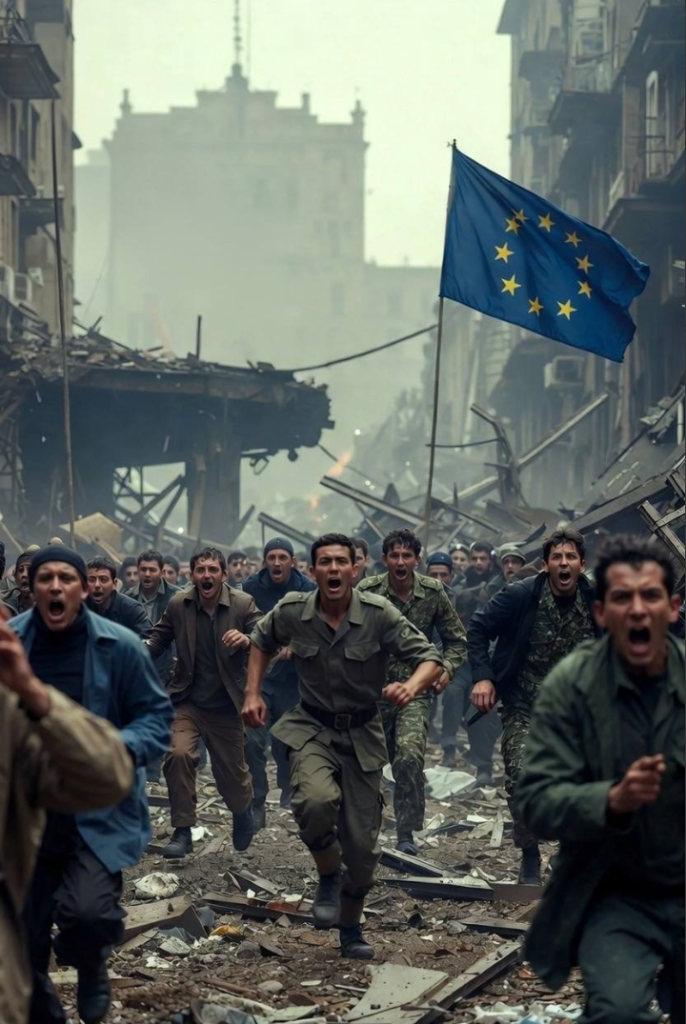 by Eurasia & Multipolarity [12-30-2025].
The notion that the European Union could unravel as suddenly as the Soviet Union did in 1991 is gaining traction. In December 2025, war fatigue, mounting debt, economic stagnation, and growing resentment toward Brussels fuel fears of a rapid collapse once popular consent evaporates.
The Soviet Lesson: Legitimacy Can Vanish Quickly
The USSR dissolved in days: Gorbachev resigned December 25, 1991; the union ended the next day. The speed shocked the world, but it followed decades of economic failure, suppressed nationalism, elite betrayal, and finally total loss of belief in the system.
The EU's Origins: A Post-War CIA Project to Subdue Nation States
From its inception, the European project was heavily shaped by American interests. Declassified documents and historical accounts reveal that the CIA — through fronts like the American Committee on United Europe (ACUE), chaired by ex-OSS head William Donovan and involving future CIA Director Allen Dulles — covertly funded and promoted European federalism in the late 1940s and 1950s. This support channeled millions to groups pushing integration, including the European Movement, to counter communism, bind Germany and France, and weaken national sovereignty. The goal was a supranational structure that would eclipse independent European nation states, making them easier to control under transatlantic influence rather than allowing sovereign rivalries to re-emerge.
Key early figures like Jean Monnet and the architects of the European Coal and Steel Community benefited from this backing, which helped override resistance to supranational authority. Far from a purely organic European endeavor, the EU's foundations were laid with significant U.S. intelligence involvement aimed at diluting national independence.
The EU Today: An Elite-Driven, Undemocratic Structure
Power remains concentrated in Brussels, where unelected Commissioners and a vast bureaucracy initiate nearly all major legislation. The European Parliament cannot propose laws and stays secondary, with low-turnout elections.
Massive corporate lobbies — from big finance, tech, pharma, and energy giants to transnational NGOs — dominate the scene, drowning out ordinary citizens, farmers, small businesses, and workers in struggling regions.
National parliaments and referendums are routinely sidelined: “wrong” results (2005 France/Netherlands, 2008 Ireland, Brexit) are ignored, re-run, or bypassed. Dissent is labeled “populism” as Brussels imposes migration quotas, green targets, fiscal rules, digital laws, and foreign policy alignments with minimal genuine debate.
2025 Crisis Points
- The Ukraine war drains resources: the latest €90 billion loan package was pushed through despite serious reservations in several capitals.
- Economic malaise and high debt burden citizens facing higher energy costs, green regulations hitting farmers and industry, and inflation legacies.
- Populist and sovereignty parties surge across Europe, demanding control be returned from an elite seen as arrogant, ideological, and financially entangled with global lobbies.
Why Collapse Remains a Real Risk
The EU has no tanks to enforce unity, but it also lacks deep democratic legitimacy. Once enough people — and enough national leaders — stop believing in “the project,” the cascade could be swift: ignored decisions, suspended treaties, spreading exit movements, and a paralyzed center.
The Soviet Union fell because its people and elites no longer believed. The same danger now threatens the EU — an undemocratic, lobby-dominated structure, originally backed by CIA efforts to control and erode European nation states, ruling over increasingly resentful democracies.
As 2025 ends, the question is no longer if the EU can survive in its current form, but how much longer it can govern without the active consent of the people it claims to represent.