Mike Adams: New AI Models Make EVERY Human Coder OBSOLETE
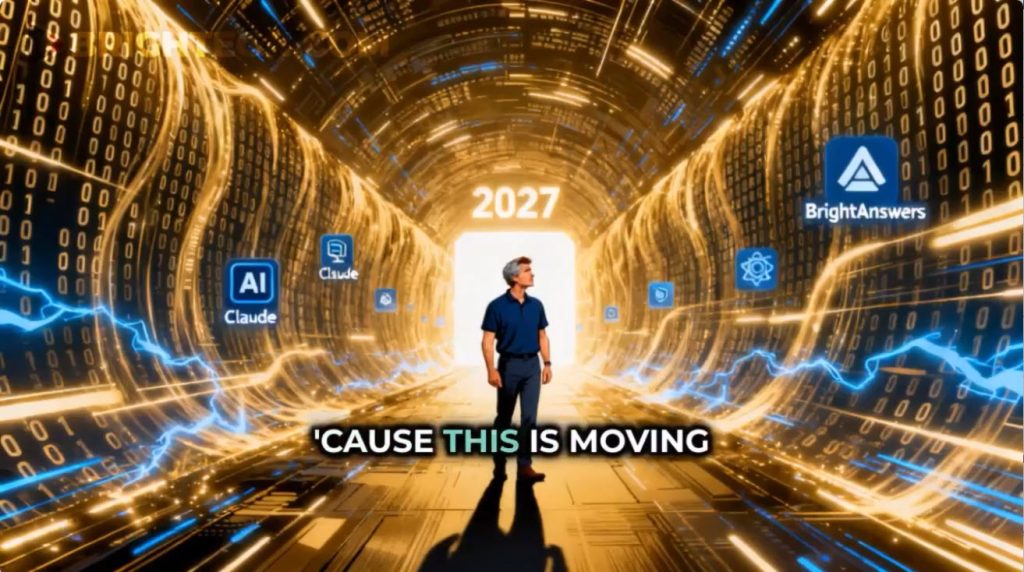
==>> SELECT this image to ACCEESS the Video <<==
by Mike Adams.
- Opus 4.6's Bug-Solving Capabilities (0:00)
- Improving Brightvideos.com with Opus 4.6 (1:22)
- Research and Content Creation with Opus 4.6 (3:04)
- Future Prospects and Predictions (5:06)
- Learning and Adapting to AI Tools (6:42)
Transcript
So I've had a couple more days to play with the Anthropic um AI engine called Claude version 4.6.
And this this engine has expertly identified and solved uh major bugs in several platforms that I, you know, that I built using AI platforms that I run.
Uh for example, on our bright learn AI book engine platform, uh it's had a persistent bug for a long time where certain book chapters would get stuck in processing due to whatever, like server restarts or something.
And they they got stuck and for a long time there were actually, I think 39 chapters from various books that were stuck and it was holding up the books.
And and no matter what I tried in terms of prompts, like nothing could find those bugs and solve them until Opus 4.6 came along.
And then I connected the project to Opus 4.6, uh and I said, look, just review the entire codebase here.
And here's a description of the behavior that's that's a problem.
I want you to find the core cause and I want you to fix it.
That's pretty much the prompt. And it worked for 14 minutes, I think it was, 13 or 14 minutes.
It identified 11 critical bugs and it fixed them all in 14 minutes.
Even though I had spent weeks trying to get this solved through, you know, other coding agents.
And then I've also had this engine working on my, um, my new brightvideos.com, which is, um, a video site.
And using the old tools, brightvideos.com was really having trouble. It was losing videos during encoding.
And it was having on-page player problems and things like that. And that's why we haven't officially launched that yet.
But I unleashed Opus 4.6 onto it and I said, hey, hey Opus, uh, take a look at the codebase here.
What is wrong?
Why, why are video files getting lost during encoding? And they never get recovered and they just vanish, what's going on?
And also, uh, what's the problem with the player here? And so it went through and it found again, critical problems and it, and it fixed it all.
And also, it built a fallback player so that if the, if the regular video player doesn't work, it will fall back to uh, sort of a, a simpler uh, script, like a, like a JS script that will play on every platform.
And so it had, you know, fall back players and, and fall back retries with exponential delays for the the HLS traffic for video segments to play, things like that.
So it put all that in place. And it did that within just a few minutes also. So those are just two examples that in my own experience, I've had Opus solve problems that previously were unsolvable.
And and I've used it for other things as well.
For example, Dr. Robert Malone, he put out a list of, I think it was 109 studies that showed the dangers of glyphosate.
And he just listed them by title and author, maybe publication date.
So I just took that list and I handed it over to Opus.
And I said, hey, um, I want you to go out and find all these uh, papers.
And I want you to just download them all in whatever form you can.
And it was able to download like 54 out of the 109 because the others were hidden behind uh, paywalls, of course.
So it downloaded maybe 54.
And those were in PDF and the and HTML formats mostly.
And I told it, hey, you know, extract the text out of the PDFs and the HTML.
And it did that.
And then, uh, I have it working up a research article based on those 54 glyphosate studies.
Well, that only took me a few minutes.
It took Opus much longer, but it was able to do that.
And these are the kinds of tasks that uh, Claude, Claude Code or Claude Co-work can do now because it's powered by this pretty amazing engine called Opus 4.6.
And as you can tell, this can make your life a whole lot easier.
If you are involved in research or content creation or fact-checking or anything of that kind.
So, uh, I've had other engineers tell me that, well, they describe it as, quote, magic.
It's just magic.
It does things that no other AI engine can do.
And I put out a podcast a couple days ago, saying that it's clear to me that Opus 4.6, this is the engine that will replace millions of humans in white-collar jobs, you know, research jobs and administrative jobs, decision-making, et cetera.
This is the engine that can do it.
And what's really interesting is this isn't even the most capable engine that we're about to see, because Deepseek is going to release its next model.
At at least that's rumored to be the case, within the next couple of weeks, certainly this month, in February.
And when they do that, it now it might be called Model One, or it might be called DeepSeek Version Four.
It's not clear yet.
I anticipate that that's going to be as good as Opus 4.6 at writing code, maybe better.
And what's amazing about Deepseek?
It's free.
It's free, it's open source because China releases all the files.
You can download the files and you can run it on your own local hardware.
Now, the full model will take server hardware, but there's rumored to be coming something called Deepseek Light, which will run on consumer-grade hardware.
You know, GPUs in your computer on your desk.
And if that turns out to be true, then, oh my goodness, you're going to have, you know, Opus-level coding capability locally at zero cost.
And that's a game-changer. Because it's, it's not just about coding.
It's also about decision-making.
It's about research, it's about writing, it's about putting together spreadsheets or presentations or PDF files, or translating things.
You name it, it can do it.
So this is the year of mass AI replacements of human workers.
And if you're not ahead of the curve on this, then you're behind the curve.
If you're not learning how to use these tools, you're becoming obsolete faster than you know.
Everybody listening to this needs to learn how to use Claude Code or Claude Co-work, I think that's what it's called.
And you need to learn how to use our AI tools at brightanswers.ai, which is an incredible research tool, of course.
that, it I mean it's it's amazing.
The the research quality that it produces is just out of this world, totally stunning.
So check that out.
And use these tools and you'll you'll stay ahead of the curve.
If you don't learn how to use these tools, you're going to be in bad shape.
Especially uh by 2027, because this is moving very rapidly.
So, learn, uh, adapt, get up to speed, you'll be fine.
If you don't learn and if you don't adapt, you'll be obsolete.
That's just where we are in the history of civilization.
So you can follow my work at naturalnews.com or you can listen to my uh podcasts and interviews at brighteon.com or our new video site, which is still in the pre-launch.
It's still a little buggy, but it's coming. And that's called BrightVideos.com.
So check it all out and thank you for listening.
Take care.